Unexpected faith

As I began to unpack in my last post, it’s easy to think that faith thrives when the environment shelters it. However, faith actually suffers when roots don’t need to run deep. There’s something about hostile or dry environments that draws out deep faith.

And when faith springs up and flowers in dark places, it shines even brighter. 

The Bible puts Sidon firmly in the “dark” category. The region became wealthy through the trading done by their sea merchants, and the triumvirate of Isaiah, Jeremiah and Ezekiel all predict Sidon’s downfall for her sins against God (Is 23; Jer 25:15-22; Ez 28:20–24). But it turns out that the widow’s faith is not exceptional; it’s actually part of a pattern. 

First, Yahweh’s Temple is built with Sidonian cedar (1 Chron 22:4). How did that happen? While God intended for Joshua to drive out the peoples in modern-day Lebanon (Josh 13:6), the Sidonians were among those who remained as a thorn in Israel’s side (Judg 3:1-4). But when King David sets up a system of tribute and forced labor for many of these tenacious peoples, he instead works out a cooperative relationship with Sidon and Tyre. 1 Kings 5 records that the king of Tyre loves David so much that he willingly contributes huge amounts of cedar and woodworkers to build the Temple. 

Jumping to the New Testament, Jesus shames the Galileans by telling them that if Sidon had seen the miracles he performed among them, they would have repented quickly (Matt 11:21). Clearly he sees them as spiritually open and much more willing to accept his words than his own people are. Indeed Luke 6:17 notes that large numbers of people from Sidon come to hear him preach and be healed. 

Then in Mark 7:24-30 and Matthew 15:21-28, Jesus brings his disciples to the area for a retreat. They’ve been running flat out, and John the Baptist has been martyred. Jesus intends to give them a break in a resort town, but a local woman recognizes Jesus and pesters his disciples relentlessly about her daughter’s demonic possession. Jesus first puts her off by saying his primary mission is to Israel. But her tenacity, her submission and her scrappy logic impress him. Jesus responds, “Woman, you have great faith!” He then rewards this faith by healing her daughter. The receptivity of this audience seems to change Jesus’ priorities in the short term. The next thing Jesus does is head for the Gentile region east of the Sea of Galilee. In fact, Jesus never commends the faith of anyone in Israel, but only among foreigners (for instance, Matthew 8:10). 

So the Sidonian widow is not really an aberration. There are a number of reasons why this woman might find Israel’s God appealing:

  • Power: Baal, her people’s god of harvest, seems powerless to defeat Yahweh’s control over the rain.
  • Compassion: Israel’s God shows himself willing to hear the cry of widows and orphans, even foreign ones. As Exodus 22:21–23 says: “Do not mistreat or oppress a foreigner, for you were foreigners in Egypt. Do not take advantage of the widow or the fatherless. If you do and they cry out to me, I will certainly hear their cry.” 
  • Grace: She’s encountering grace on a daily basis. In spite of her sin, Elijah and his God are still providing for her rather than judging her.

There’s something about Sidon, this land in such close proximity to God’s people, struggling to hold onto its beliefs and stand against Israel’s religion. Spiritual sensitivity and hungry seekers keep popping up from that region throughout the Bible. Perhaps this is the ultimate answer to Jesus’ provocative question to the Jews: if there were lots of widows in Israel, why did God use a widow in Sidon? (Luke 4:25-26). 

But what if these aren’t one-off examples? What if the roots are connected? What if the widow is open to Yahweh because of David’s kindness to King Hiram? What if the woman with the demon-possessed daughter reaches out to Jesus because the story of that widow was embedded in her culture? A seed had been planted centuries before.
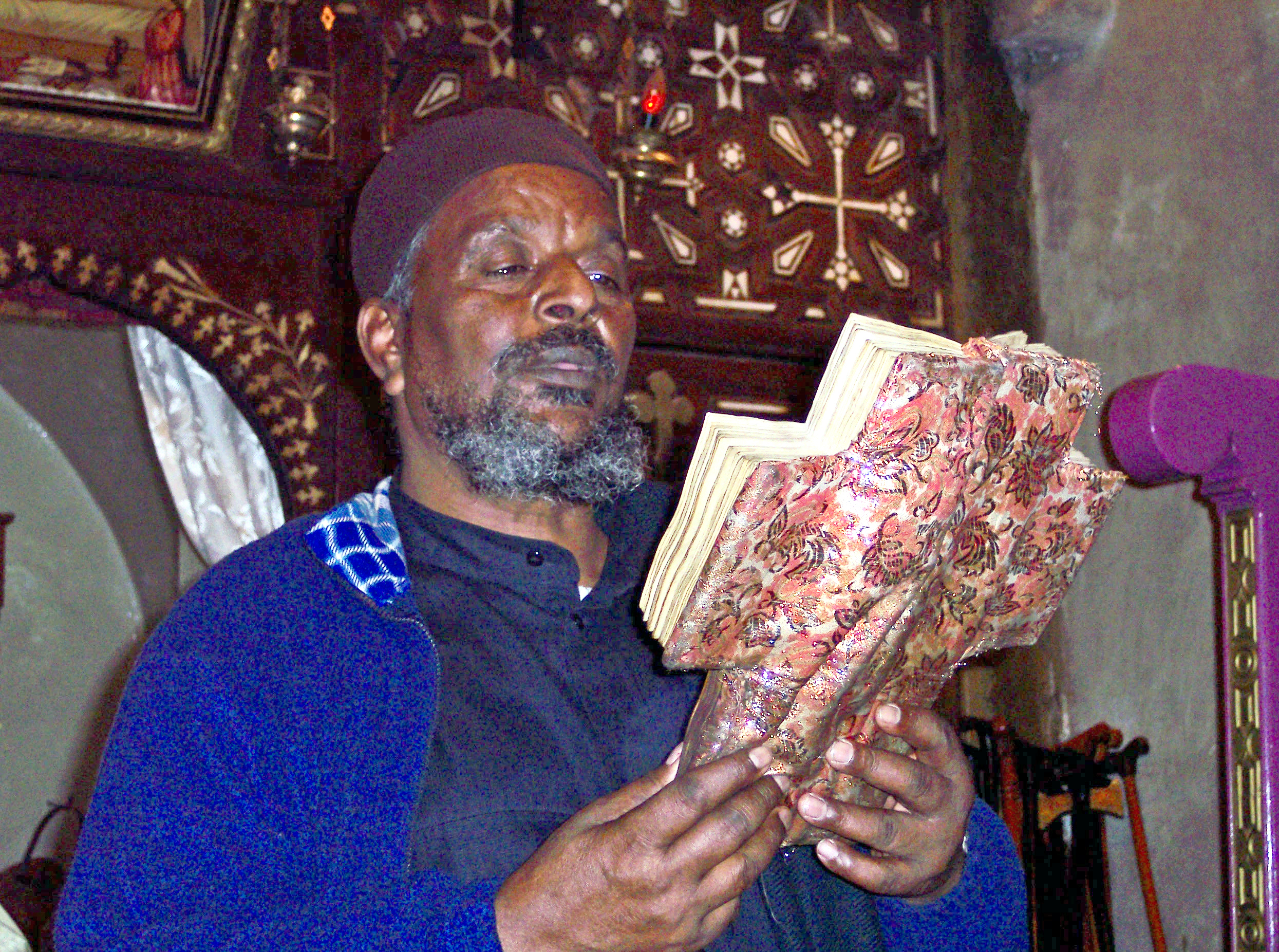
Something similar happened in Ethiopia. My wife Becky and I once had the opportunity to visit an Ethiopian Coptic Church in Israel. The priest we spoke with recalled the Church’s long history, pointing to a tapestry behind him depicting the Queen of Sheba’s visit to King Solomon (1 Ki 9). He then connected her story to a God-fearing Ethiopian who centuries later made his own pilgrimage to Jerusalem (Acts 8:26-40) and was baptized as a Jesus-follower. Both the Coptic Church and the Beta Israel community in that country have ancient roots.

In Wycliffe, we hear about these seeds all the time. Before a missionary sets out for the most distant place she can imagine, she needs to understand that God is there and working before she arrives. As I noted in my last post, there’s a second narrative: the purposes God is pursuing in the lives of the people before the missionary arrives. If you have any doubts, read Don Richardson’s 1981 classic, Eternity in Their Hearts

Faith can spring up in surprising contexts, standing out even more because of the darkness it’s set against. And dormant seeds that were sown centuries before can suddenly spring to life.

Do you have one of those stories, where you’ve seen God at work in unexpected places? I’d love to hear examples of God revealing a little spark of faith where we’d never expect it. Leave me a comment with your story.


Elijah series:

Unexpected testing

In my last post I looked at the remarkable sources of God’s provision for the prophet Elijah: God mobilizes scavengers, multiplies the assets of the poor and enables the marginalized to contribute. In doing so, God challenges the assumptions and mental blocks of the privileged and presumptive sources of provision—people like me. In fact, the story is told in a way I can identify with, because its focus is Elijah.

However, even as God is working his purposes in Elijah’s life, he’s also working in the widow’s life. He yearns for her to know him, and he’s using Elijah to bring about his purposes for her. The widow’s version of this story might read a lot differently, but there’s not much detail on which to build that retelling. So we try to read into the woman’s actions and the small handful of words captured in this story.

For instance, I would like to know if, when she enters the scene, she already has a spark of faith. Did God reveal in some way, prior to her meeting Elijah, his plan and calling to her? Even as she has lived on the edges of Israel’s border, has she been seeking Israel’s God? I also wonder how this widow responds to God’s daily miracle. 

In the previous act of this story (1 Ki 17:8-16), this widow took a leap of faith to trust the man of God. In this final act (1 Ki 17:17-24), she faces a crisis of faith. Just as things are starting to look hopeful, her son dies, and this setback seems to confirm her worst fears: that this God is just like all the others.9 For most people in her situation, there is no rags to riches outcome. She may even have been bracing for bad news because it figures, after the series of misfortunes she has experienced. Her words reveal her resentments and core beliefs: she asks Elijah what he has against her, but she’s really asking what God has against her. This loss might not be as painful if her heart hadn’t opened a bit.

It’s interesting that she raises the issue of sin (v18). Romans 5:13 tells us that “sin is not charged against anyone’s account where there is no law” (see also Rom 5:15); therefore, she’s not under the Hebrew Law. However, she understands in some way that she has missed the mark; she’s not in right standing with God. 

In that comment, she reveals that she understands sin has a price. But she also reveals that she was expecting grace, the primary characteristic of Yahweh she has personally experienced so far. In her pain and anger, she reveals a level of conviction and a fragile faith. 

Digging further, history tells us that worship of Baal sometimes required child sacrifice. Now the God of Israel seems to have taken her son. So again, is this God any different? It’s an enormous test of her faith, beyond what many fledgling believers could withstand. 

In fact, this is where Western believers sometimes get tripped up in their faith. Why would God allow this kind of trial when the woman’s faith is so fragile? It’s appalling to read stories like Jesus confronting the rich, young ruler and then watching him walk away (Matt 19:16-22) or offending his followers and chasing away those who weren’t serious (John 6:60-66). Why wouldn’t the God who doesn’t snuff out a smouldering wick or break a bent reed (Is 42:3) shelter this widow’s simple expression of faith until it’s strong enough to withstand a storm? What if her faith breaks? 

Elijah’s response suggests he has the same mindset; he even seems to be having his own crisis of faith. He doesn’t speak to the woman at all: no compassion expressed for her loss, but instead, a brusque, “Give me your son” and a march up the stairs to his room. His prayer reads to me as rather accusatory: God, did you bring tragedy on her? Did you kill the boy? Perhaps he expected his presence in her home to have brought her some kind of covering rather than make her life worse.

The passage says God listens—even to sullen, angry prayers like Elijah’s. Yet, for Elijah, the son’s resurrection was probably more of a relief than a moment of great joy. Maybe the woman’s faith will survive this crisis now.

Don’t miss the amazing faith in Elijah’s prayer; he asks God for something no one had ever dared to dream of before. Up until this moment, death was always the end. We get used to the New Testament stories, but this was the first recorded resurrection in the Bible.

Take a minute to read one of them: Luke 7:11-17. Jesus is traveling in Galilee when he encounters a funeral procession. The only son of a widow has passed away. Jesus raises the young man to life, then gives him to his mother. In this parallel story I see two insights into the Zarephath story.

First, Jesus responds with compassion and cares for the widow before addressing death. The contrast to Elijah’s bedside manner exposes where his response was lacking. Perhaps the difference is simply one of character and personality: Elijah was full of faith, but he was also a flawed individual who was prone to emotional ups and downs. But it also reveals power and knowledge: Jesus knew how the story would end, because even then he had authority over death, while Elijah was pleading for the impossible.

Second, we see the response of the witnesses: fear seizes them and they glorify God. They conclude two things: Jesus is a great prophet, and God has visited his people. The Sidonian widow concludes the same thing about Elijah and God:

  • She says, “Now I know.” She has experienced it herself.
  • She recognizes Elijah as a prophet—his words are truth, and in his mouth are the words of Yahweh.
  • When she identifies Elijah as a man of God, she refers to God as Elohim—the supreme God, the God of gods, the God over Baal.
  • The deeper message is a profession of her belief in God. She no longer refers to Yahweh as Elijah’s God, as she had in v12. God has visited her.

In God’s miraculous resurrection of her son, she encounters even greater power and even greater grace than she has been experiencing on a daily basis.

So why does God give her such an extreme test? I believe he knows that her faith can’t stay in its current condition. Elijah will soon be leaving, and she needs to be able to stand on her own feet. It is time for her to reach a decision about whether she and her household will believe, and serve the Lord (Josh 24:15).

I started this series researching to see how non-Westerners read this chapter. The North American approach would likely be to coddle such fragile faith by protecting the seedling, growing it carefully and guarding it from any real test in the early years. Many in the East and the South would say that’s unrealistic and point out that too much water or protection of a plant leads to shallow roots. Years later, when the plant is growing and should be mature, it is actually still fragile because of its roots. They would expect sacrifice, suffering and danger to come for a new believer, and rapid root growth is necessary for resilience.

We don’t know what happens with this woman after this. But her story can’t be looked at in isolation. Her line will now continue, and when seeds of faith are planted, you never know when they might pop back up again. We’ll look at that in our final post in the series.


References (intentionally seeking non-Western views)

9. Tse, Justin. “Elijah.” (Hong Kong) A Sermon for Revised Common Lectionary, Year C, Proper 5. Patheos. 27 July 2016. https://www.patheos.com/blogs/ecperson/2013/06/10/preaching-elijah/


Elijah series:

Unexpected provision

In my previous post, I looked at Elijah’s preparation for this moment when God will bring three people together to provide for each others’ needs. Read along in 1 Kings 17:7-16.

Now we meet a Sidonian mother who is the very picture of dependency. This woman might be described as “house poor”: living in a 2-storey house4 in a resort town suggests she may once have had a better life.5 She lives in a paternalistic society, where widows lack legal rights outside of bearing a son.3 The book of Ruth gives us a glimpse of the life of a couple of widows, and the bitterness Naomi felt from the way her life turned out (Ruth 1). On top of that, the way she sees the world is likely framed by a narrative like this one: her people have been marginalized for centuries; Joshua, David and Solomon were not able to dislodge them from their land,5 and they have a long history of worshiping a god who angers Yahweh. So she’s stigmatized and oppressed by Elijah’s people, and she’s caught downstream from a political and religious battle between those in power.

Think of all the minoritized demographics all wrapped up in this one woman! Take a minute to absorb the context and put yourself in her shoes. Feel her hunger pangs and her concern for her son. And consider why she’s outside the gate of the city gathering sticks. 

It’s remarkable to think about the sources God summons to meet Elijah’s needs. So often we form our own idea of how God will provide, or we even strategize as if God needs our suggestions. But the God described as owning the cattle on a thousand hills (Ps 50:10) shows here that he can mobilize that provision through the most unexpected conduits. As Jesus asks rhetorically (Luke 4:25-26), why would God choose this woman of all possible providers for Elijah? If it had to be a widow, there were Jewish widows and even wealthy widows. Everything is upside down from our expectations.

How would this widow in a Baal-worshipping region respond to God’s command? We know the birds will obey their Creator, but will she? Funny enough, the text doesn’t tell us whether God briefed her on her role. It’s difficult to interpret in the brief clips of conversation whether she was sarcastic or resentful or open. I’ve tried reading them with different tones of voice.

Her provision starts with hospitality for the weary prophet. When Elijah comes to her, she welcomes him… to some degree. To western ears, his requests seem rude.4 For instance, his first request for water is basic, but note that he’s asking for the very resource that he’s responsible for making rare and overpriced! To eastern ears, her response is rude. She skips a number of steps of hospitality expected in that culture—such as inviting him to rest or giving him water to wash his feet after his journey—some of which were affordable even to one living at her level of poverty.5

Elijah’s requests come with a promise (v14), but they’re a big leap of faith for this woman: a third of her last meal, and he must have the first portion. Why should she believe the promise of the God of Israel, a foreign deity? Perhaps it’s desperation that forces her to place her trust in the word of “Yahweh-is-God.” Joseph Bayode observes about this decision point6:

She had every reason to say no. She was desperate. She had a child to protect. She had only enough for one last supper and a slow, sorrowful death. But instead of resisting, she obeyed. She gave out of her lack, not her abundance. And in that moment, her faith triggered divine provision.

The Sidonian widow has to make two leaps: Elijah’s God can be her provider, but he also intends for her to be a provider.7 What mental and cultural barriers does the Sidonian widow overcome to say yes? 

Perhaps more relevant to us, what mental and cultural barriers does Elijah have to overcome to receive God’s provision from this woman? What does this man of power, access and comparative wealth have to learn in order to receive help?

I’m struck by the empathy required in God’s solution. First, Elijah becomes equal with the woman and her son. The Old Testament regularly lumps foreigners, the fatherless and widows as similar vulnerable populations under legal protection4 (see examples such as Dt 10:18-19 and 24:17-21). For all the power, influence and relative wealth Elijah possesses, he is no different from her.

Second, the next weeks and years ahead are a matter of daily faith and struggle, because God doesn’t provide all at once. Oil and flour that never run dry are not a source of wealth building, but a means of daily subsistence requiring continued faith. 

The three have to negotiate a co-existence. In order for Elijah’s needs to be met, God forces him to wade into the woman’s world of poverty—not aloof or indifferent, but showing concern about her daily need.8 Digging out of a poverty cycle is not a quick or easy thing. He has to walk with her as she wrestles free of the multiple levels of material, mental, emotional and spiritual poverty. He is an expression of Immanuel—God with us—to this woman.

It leaves me wondering: What mental blocks do we need to challenge as we think about sources of provision? What if God wants to move his Church away from an unhealthy dependence on Western funding? And what if he wants to challenge our view of wealth as a prerequisite for provision. It’s counter-intuitive, but God has all the resources, and sometimes he directs them through surprising conduits.

This story shows that everyone can participate in his mission. There’s a great example in 2 Corinthians 8:1-5, when the first-generation Macedonian churches, in their poverty and youthful passion, begged for the privilege of contributing to God’s work. God has a very different view of assets than we do. He often starts with what’s in our hands, as he did with Moses and his staff (Ex 4:2). And as he does here with the flour and oil. He’s the originator of the asset-based-development strategy. 

For that matter, what about sources of truth and sources of authority? We’re living in a day when the center of Christianity has moved outside the West. The centers of influence for the global Church are now in places with a much younger Church. Are we willing to receive calls to Biblical orthodoxy from places like Rwanda and Ghana? Are we willing to be challenged by the development of Indigenous theology coming out of Brazil and Indonesia?

As leaders, it’s a good time to re-orient our posture toward this new era for the Church. Ask yourself: what mental barriers you need to break in order to be ready for what God wants to do?


Reference (intentionally seeking non-Western views)
3. Seifert, Marlon. (Brazil)
4. van der Walt, J.S. (South Africa)
5. Gafney, Wil. (U.S., African American) “Hermeneutics of Reversal: Widow of Zarephath.” Womanists Wading in the Word. 18 March 2022. https://www.wilgafney.com/2022/03/18/hermeneutics-of-reversal-widow-of-zarephath/
6. Bayode, Joseph. (Nigeria) “The Widow of Zarephath.” Medium. 4 May 2025  https://medium.com/@JosephBayode/the-widow-of-zarephath-38c8957dc5a2
7. Claassens, Juliana. (South Africa) “Commentary on 1 Kings 17:8-16.” Working Preacher. 8 Nov 2009. https://www.workingpreacher.org/commentaries/revised-common-lectionary/ordinary-32-2/commentary-on-1-kings-178-16-3
8. Hunter, Max. (U.S., African American) “Racial Reconciliation in the New Creation: 1 Kings 17.”The Center for Biblical and Theological Education, Seattle Pacific University. August 2014. https://spu.edu/lectio/racial-reconciliation-in-the-new-creation/


Elijah series:

Unexpected preparation

I’ve been studying how God provides for his mission—sometimes surprising the recipient and the provider of that resource. There are few more surprising examples than one that Jesus comments on when trying to make a point to the Jewish leaders of his day:

There were many widows in Israel in Elijah’s time, when the sky was shut for three and a half years and there was a severe famine throughout the land. Yet Elijah was not sent to any of them, but to a widow in Zarephath in the region of Sidon (Luke 4:25-26).

As I studied the story he’s referring to, in 1 Kings 17, I had to set aside my Sunday School understanding of the story. Reading it through a traditional Western lens wasn’t much better, so I intentionally sought other perspectives—especially sources in Africa and Asia, as you can see in my reference list. Many are not from my denominational segment, and I admit I’m not entirely comfortable with all that these authors write. But their perspective helped challenge my assumptions and fill in what I might be missing from my cultural lens.

Let me start with a leadership principle: Leaders sometimes fail to think of those who live downstream from their decisions or actions. 1 Kings 17 is set in a larger context, as the end of chapter 16 begins to explain. Queen Jezebel and King Ahab are leading the people of Israel to worship a god from the nearby land of Sidon, the god of rain and harvest: Baal. God’s intent to expose Baal’s actual powerlessness leads to a political and religious battle between representatives of God and Baal. But rather than focusing on those in power, this passage zooms in on the story of two people caught downstream from that battle: Elijah, the unwitting victim of his own action, and a widow and mother caught in the crossfire. So the story selection itself lifts up the weak and marginalized, which was part of Jesus’ point as well.

If you are familiar with the prophet Elijah, you likely picture characteristics like moodiness, fears, inspiring faith, living in the moment, and a sense of theatre. But all the character development in this story takes place along the way; he gets no introduction. So I want to encourage you to look at the chapter with fresh eyes. The reason we know Elijah is a prophet is because of his name and his first words. For a Jewish reader, the story starts this way:

Now Yahweh-is-God… said to Ahab, “As the Lord, the God of Israel, lives, whom I serve, there will be neither dew nor rain in the next few years except at my word.” 

Yes, Elijah’s name gives away his purpose. God intends to show that he is above all other gods by attacking the source of Baal’s power and identity; he will withhold rain. 

Immediately after this proclamation, God tells his man to run and hide, and then offers a series of provisions to get him through the next 42 months. God has an intentional season of preparation in mind. First, he offers the prophet a hiding spot by a brook (v5). There Elijah discovers a ready supply of food Jews were expressly forbidden to eat. The means of delivery, a raven, will make him unclean1 (Lev. 11:15), and the food any scavenger delivers would have unknown origins or preparation methods. So the first thing to consider: What did it take for a kosher Israelite to receive food from a scavenger?

For that matter, why would the God who gave the Law intentionally ask Elijah to defy the Law? He does the same with the apostle Peter in Acts 10, and that gives us a clue: God prepares both men ahead of time to minister in a foreign environment. They could never engage cross-culturally if they were sticklers who couldn’t even set foot in a Gentile house or eat their food.2 

There’s another lesson for Elijah during this period. He can’t look too far ahead, because relying on a brook during a drought is a losing proposition. He has put all of his trust in God, and God seems to have only anticipated some months of provision.3 Elijah watches the water level drop day by day, not knowing how God will meet his needs in the future. 

Having learned the life of a fugitive and daily dependence on God4, Elijah is now ready for the mission God is sending him on. That’s right: God’s goal isn’t just to meet Elijah’s needs while he waits for Jezebel and Ahab to soften; God intends to use him as a cross-cultural missionary, to meet the needs of someone else hurt by the drought and famine.

Only after the brook dries up does God reveal phase 2 of his plan. God’s solution for his prophet’s needs means sending Elijah:

  • Over 75 miles away, on the opposite fringe of Ahab’s kingdom, a journey either through a hostile kingdom or around it. No doubt fraught with danger.
  • Into the heart of Baal-worshiping Sidon, the land ruled by Jezebel’s father (16:31, 17:9). This location was no less safe for Elijah than staying in Israel.
  • To a widow preparing her last meal before giving up.

Can you feel the objections and questions rising in Elijah? Before experiencing and receiving God’s provision, he has to overcome his own mental blocks. 

Have you ever gone through a season that in retrospect, seems designed to break your previous patterns of understanding? God can use failure to do that. Or a cross-cultural clash. Or a crisis. It’s painful in the moment, but God’s plan for your next phase wouldn’t be possible without it. For Elijah, it’s going to get even more challenging.


References (intentionally seeking non-Western views)
1. Ruolngul, James R. (India) “The Wisdom of God in His Providence.” Independent Church of India. 11 November 2022. https://www.ici.net.in/the-wisdom-of-god-in-his-providence/
2. Compare the centurions in Mathew 8:8 and Acts 10:24-26, for example.
3. Seifert, Marlon. (Brazil) “Elijah and The Widow.” Sermon. 2 Oct 2025. https://prmarlon.com/blog-2/elijah-and-the-widow
4. van der Walt, J.S. (South Africa) “The recipient becoming a participant and the participant becoming a recipient: A strange encounter in 1 Kings 17 with a not so strange outcome.” Acta Theologica, University of the Free State. 10 December 2021. https://scielo.org.za/pdf/at/v41s32/13.pdf
Quoting Wyatt, Stephanie. (South Africa) “Jezebel, Elijah, and the Widow of Zarephath: A Ménage à Trois that Estranges the Holy and Makes the Holy the Strange.” Journal for the Study of the Old Testament. SAGE Publications. 15 May 2012. https://doi.org/10.1177/0309089212438020


Elijah series:

Seeing with spiritual eyes

What did you hear from God?

That’s the question I anticipate others wondering after I’ve taken a full day in solitude and prayer. It is no easy thing to take that much time in a busy period, and it’s painful to consider coming away with nothing tangible. When spiritual expectations are high, leaders have a strong temptation to make something up rather than admit they didn’t hear anything.

I wonder if the reason that no great prayer is recorded in Exodus 17 is that, up on that mountain, Moses is more focused on listening than speaking. In my experience, a day of prayer includes both sending and receiving. I would expect that, as a friend of God (Ex 33:11), any conversation between Moses and God would have been two-way. It’s possible the words aren’t recorded because they are not as important as what Moses is hearing and seeing.

Continuing the discussion of my last blog, in this post I want to consider a second line of thought:

B. What should I see that is not visible?

What does Moses see? When he reports back after his day on the mountain, it’s clear that he has seen some things that went way beyond what played out before him in the valley. When the battle is over, God tells Moses to write down a record, and recite it in the ears of Joshua, of what seems to be God’s plans over centuries (Ex 17:14,16). God has revealed His purposes, pulling Moses out of the present and into His mind for the nations and eras. This will prove to be merely the first battle with Amalek, and it will be a war that carries on from generation to generation. Eventually, someday, Amalek’s memory will be blotted out, but not before continual attempts to “wipe [Israel] out as a nation” (Ps 83:4)

It’s chilling to consider how this will come true in later passages of Scripture.

  • When the Israelites first listen to the ten spies instead of Caleb’s and Joshua’s advice, then change their minds and try to enter the promised land in their own strength, it’s Amalek who decisively defeats them (Num 14:45). Amalek relishes its role when Israel is at its weakest.
  • They will feature in almost every attempt to destroy David’s messianic line. For instance, it’s Amalek who kidnap David’s wives and children at Ziklag (1 Sam 30).
  • It should be no surprise that Haman, the man who led the most blatant effort at anti-Semitic genocide, was descended from an Amalekite king (1 Sam 15:7, Esther 9:24).
  • Moses’ reflection on this moment in Deuteronomy 25:19 takes on modern relevance when he says, “you shall blot out the name of Amalek from under heaven. Do not forget!”

In fact blotting out Amalek is exactly what Samuel commands King Saul to do in 1 Samuel 15:2-3. God tells him to devote the Amalekites to destruction and annihilate them because of the ambush of Israel in Exodus 17. When Saul lets some of them live, failing to carry out God’s “fierce wrath against Amalek” (1 Sam 28:18), God rejects Saul as king.

So this isn’t a run-of-the-mill, single, flesh-and-blood battle. Moses is tuned into an epic battle between the spiritual forces taking place behind the scenes. None of it was visible to anyone else.

In my last post, I mentioned three responsibilities of a leader in his or her intercession:

1. Gaps

2. Traps

3. Opps

To that list, I want to add another:

4. Insights

Seeing the invisible

A leader can gain several levels of insight as he prays. It may be long-term perspective, or spiritual underpinnings, or prophetic revelation. A key factor is the leader’s practiced sensitivity to God’s voice—which largely comes from personal spiritual disciplines such as solitude and silence, reflective practices like examen, and discernment practices such as consolation and desolation. It also comes from a commitment to courageous responsiveness to any direction received from God.

How does a leader develop that kind of sensitivity? For most of us, it doesn’t come easily. Some leaders have more of a prophetic or priestly approach to leadership; I have more of an kingly bent. What’s more, I didn’t have much practice in these disciplines before I stepped into the top job at Wycliffe Canada. Motivated by an overwhelming hunger for God’s presence, knowing that a large organization was too heavy a load for me to carry (Num 11:14), and a longing for the wisdom that comes from God (James 1:5), I was grateful when a board member introduced me to Ruth Haley Barton. Her book, Strengthening the Soul of your Leadership, drew out lessons from Moses’ life—how his own 40 years in the wilderness prepared him to lead a nation through the wilderness for 40 years. Encouraged by her prior book, Sacred Rhythms, I began to try to put into practice Moses’ rhythms of seeking God, spending time with Him and turning to Him in frustration, weariness, and anguish.

Her next book, Pursuing God’s Will Together, led me in leading a team to sharpen our ability together to listen and pay attention to how God speaks: as Scripture comes alive; as we notice His activity and presence; as we sense His peace and consolation in a decision; as He draws our attention to facts we might have missed; or as we examine a check in our spirit, a sense of desolation.

I’m still not great at it. If I’m not in practice, I lose the ability to receive from the Lord. But I’m committed to listening for God’s voice and insights. It’s a discipline that’s critical for my spiritual authority as a leader. I’m only worth following as I follow Him.

IMG_5048


Moses on the Mountain series:

Don’t delegate this!

I have been on a journey around spiritual leadership in the past seven years. That kind of leadership doesn’t come naturally to me. In terms of my style of leadership, I’m more of a king than a prophet or priest. When it comes to spiritual leadership, there is no better model than Moses. Ever since a board member first handed me a copy of Ruth Haley Barton’s book, Strengthening the Soul of Your Leadership, I have been intrigued at the depth of Moses’ relationship with God as the basis for his leadership. However, I’m not sure spiritual leadership came naturally to him either—it was an acquired discipline, skill and way of life. Over the next few weeks, I want to mine some gold from one event in particular.

In Exodus 17:8-16, Israel faces its first battle since God miraculously helped them escape Egypt and single handedly wiped out Pharaoh’s army in the Red Sea. Now, as Amalek attacks, Moses turns to someone never before mentioned in the Bible and tells him to choose men, go out and fight while he goes up on a mountain. The passage never definitively unpacks what happens at the top of that mountain.

Have you ever read a passage where numerous things don’t quite add up? You sense it needs deeper study to understand the complexity. Over the past year, I’ve been continually drawn back to Exodus 17. At one point, I read it every day for a month, writing down my discoveries. It’s not transparent, and there are layers to be peeled back. Some of the questions that triggered my study were:

  • If Moses has a “tent of meeting,” where he regularly talks to God face-to-face, why does he go up on the mountain to pray?
  • When we have so many great prayers of Moses recorded, why do we know nothing of Moses’ day on that hill other than his hand positions?
  • When he comes down at the end of the battle, why does he have a message about Amalek so completely out of touch with Joshua’s experience that day?

My study of this passage has shaped my understanding of spiritual leadership and how my role needs to shift. Let’s jump in.

Don’t delegate this!

To be effective, every leader has to ask the question, “What is it that only I can do?”, then delegate everything else. That’s the lesson Moses will get drilled into him by his father-in-law in the next chapter. The ancient historian Josephus says Moses was a general in Pharaoh’s army. Sure, he’s long retired from his own fighting days, but when Amalek attacks, he chooses to delegate on-the-ground leadership while keeping spiritual leadership responsibilities. Why?

There are some hints about the insights that lead Moses to this conclusion.

The first thing I noted is that this story begins with the word, “then.” It begs the question, “what came before this?” Moses has just produced water from a rock, but in a context where the people are angry enough to stone him. It’s a critical-enough moment in Israel’s history that the place will forever be identified with the events of that day. However, rather than naming it after the miracle, Moses names it after the danger: “Testing and Quarrelling.” There are several fundamental questions raised in that event:

  • Is God among us or not?
  • Does Moses speak for God?

Moses clearly identifies the circumstances as a spiritual attack – an indirect attack on unity, using accusation and division.

Before they have even left that site, a direct attack comes. It’s a test of a very different nature, and Moses recognizes that it needs a different response.

We also have the benefit of hearing Moses’ commentary on that moment, recorded years later. In Deuteronomy 25:17-19, he would remind Israel that, “When you were weary and worn out, [the Amalekites] met you on your journey and attacked all who were lagging behind.” Such predatory behaviour, picking off the weak and isolated, resembles Peter’s warning to believers: “Your enemy the devil prowls around like a roaring lion looking for someone to devour.” (1 Peter 5:8). 

The second half of the chapter is a continuation of the same two foundational tests: whether God is among them, and whether Moses speaks for God. Moses could dive into the task at hand, boldly leading the people in battle from the front. Instead he holds onto components that address the deeper spiritual nature of this challenge. That is the part he can’t delegate.


Moses on the Mountain series:

Wartime leadership: a case study from Nehemiah

Having examined the defensive positioning and offensive weaponry of our warfare in previous blog posts, I want to return to my main point. How do we as leaders respond to these attacks, these schemes, these tactics? What does wartime leadership look like, when others are depending on us and looking to our lead? How can we assist our followers and our organizations in fighting back appropriately?

I think it’s appropriate to look at Nehemiah as a case study. The first half of the book of Nehemiah lays out the man’s extensive work to rebuild a wall to protect a city long-term, while at the same time using his builders as armed guards to keep watch against local enemies. The attack never came. Nehemiah was successful, and through his visionary servant leadership, the wall was completed in 52 days.

But as I read through the book recently, it struck me that the attack did come. It wasn’t one large military force coming at the gates or besieging the walls; it was a thousand darts that came from unexpected places. This is my partial list:

This list is much more devastating and effective than sticks and stones. It’s amazing how fear of shame, derision and jeering can keep the mightiest leader firmly in his chair. Nehemiah could have held onto his position in Persia and considered himself there “for such a time as this.” But his calling was different than Esther’s. By challenging the status quo and stepping up to lead the change himself, Nehemiah put his own reputation on the line. He risked not only his position and his safety from outside attack; he risked internal attack if his followers gave way. For an interesting parallel, consider what Moses put up with as he led over a million men, women and children through the wilderness.

So how did Nehemiah circumvent, undermine and defy the attacks of his enemies? We can learn an awful lot from his example. Here are a few key lessons.

1. God awareness
Nehemiah was constantly aware of God’s role in his success. When the king granted his request, he knew it was the result of prayer, because “the good hand of my God was upon me” (2:8). When it came time for Nehemiah to get everyone on board his vision to rebuild the walls, his punch line was his testimony: “I told them of the hand of my God that had been upon me for good, and also of the words that the king had spoken to me” (2:18). They were convinced. Of course, when the wall was finished in a remarkable 52 days, he claimed no credit. Instead, Nehemiah said it was obvious even to their enemies “that this work had been accomplished with the help of our God” (6:16).

Nehemiah constantly pointed his followers back to the Lord, inspiring them with God’s greatness (4:14), encouraging them that God would fight for them (4:20), challenging them with the fear of God (5:9), and decisively dealing with sin as treachery against God (13:27). It seems clear that the courage he consistently demonstrated came from his constant awareness of God’s presence and a sense that he would be held accountable as a leader. That same courage is available to us. It starts with the same awareness.

2. Never get undressed
In the busiest, most stressful part of the project, the threat of attack imminent, Nehemiah decreed that everyone must stay in Jerusalem for the night as a guard for the city. Then he noted that they kept their weapons within reach, and “none of us took off our clothes” (4:23). If you haven’t had time to read my last blog post on the right clothing, now’s a good time to read that. When we realize that we are at war, we don’t ever let our guard down. We continue to protect ourselves and our families with truth, righteousness, readiness through the gospel of peace, faith, salvation and the Word of God. We don’t ever take off compassion, kindness, meekness, patience, forgiveness and love.

Have you seen the scene in Saving Private Ryan where, in the thick of battle, a bullet clangs off a soldier’s helmet? He takes off his helmet to marvel at the dent, only to fall to another shot? If we take off our armor even for a moment, we are incredibly vulnerable.

3. Practice prayer rhythms
Nehemiah’s prayer life certainly included prayer and fasting marathons during times of waiting (ch 1), but his day-to-day management was stabilized by a prayer reflex that helped him handle difficult situations:

  • When he was almost paralyzed by fear before the king, he sent up a quick prayer to God (2:4).
  • He took out on God his rage at his enemies, rather than letting the people see it (4:4-5).
  • When he heard of new plots, his response was twofold: prayer and setting a guard (4:9).
  • His sentence prayer at the end of chapter 5 suggests that his generosity in sharing his table wasn’t without personal cost of some kind.
  • When he exposed plots against himself, he took strength from the Lord (6:9) and trusted God to pay his enemies back (6:14).
  • I believe it was this rhythm of prayer that allowed him to see and understand the plot against him in 6:10-13. Discernment comes from time spent with the Lord.

It’s in that communing, that constant awareness of the Lord that you learn to hear His voice for encouragement, wisdom and venting.

4. Face the problems head-on
Sitcoms have overdone a common storyline: someone who needs to have a difficult conversation, but they constantly avoid it and choose the easy path until the problem blows up to comic proportions. I find those storylines incredibly frustrating. Leadership is about tackling the tough issues head-on. That’s what Nehemiah did in chapter 5 when class warfare raised its ugly head. When he discovered the rich were making profit out of the desperation of the poor, Nehemiah wasted no time bringing this exploitation to light and challenging the rich (5:6-7). By using his own example, deliberately choosing not to assert his rights, he managed to do it in a way that brought them on board, to the point that they closed the matter with a worship service together!

In chapter 13, he took on another problem with similar forthrightness, but with a different approach. This time he evicted a resident of the temple, confronted officials, warned and threatened merchants, and then cursed, beat and pulled out the hair of Jews who knowingly committed sin. There’s a progression of increasing anger, frustration and violence, punctuated by frequent prayers for God to remember him for these deeds. His constant refrain reveals his motives: the fear of God trumped fear of people.

As Jesus said, “And do not fear those who kill the body but cannot kill the soul. Rather fear him who can destroy both soul and body in hell” (Matt 10:28). Ultimately, Nehemiah had one audience, and he never let the fear of man hold him back from what he needed to do. As David put it, “In God I trust; I shall not be afraid. What can man do to me?” (Ps 56:11)

Here’s the bottom line: anyone doing “a great work” (6:3) is going to face attack, and we can learn a lot from the way Nehemiah approached his mission. If you’re in the middle of a swarm of fiery darts, don’t give up. It’s not about you; it’s about God from start to finish.

For it is God who is at work within you, giving you the will and the power to achieve his purpose. (Phil 2:13)

Getting the best from your team

Have you noticed that there’s a shortage of good stories about CEOs that don’t fall into the stereotype of wealthy-fat-cat-who-dodges-taxes-and-treads-on-the-poor? Where are the stories about a corporate or organizational president who wants to do what’s right but runs into constant ethical grey areas, and faces struggles with public perception, morasses with no good outcome and dark nights of the soul—not to mention overcoming his or her own personal weaknesses? The current TV series most benevolent to CEOs is Undercover Boss, in which the big boss risks embarrassment and ridicule as he or she attempts to step into the shoes of an average employee within their own company.

I think my hunger for good president stories led me to dust off The West Wing, the long-running TV series from the 2000s that focused on the staff serving with the president of the United States. The episode I watched last night depicted a White House mired in a controversy that was in large part caused by a president who was less than forthcoming with his own staff, let alone the public. It causes the president’s staff an enormous amount of extra work and personal expense, as they each have to hire their own lawyers. They begin to crack under the stress, and it becomes clear that the core problem is not overwork or personal cost: as loyal as the staff are to their president, they haven’t forgiven the president for not bringing them into the loop earlier. By the end of the episode, the staff entertain a number of possible steps their leader could take to repair the damage.

  • Does he need to commend their hard work and give them some time off?
  • Does he need to apologize and spend some time getting them on the same page again?
  • Does he need to lay out a bold vision for the future that stirs their hearts to get over their personal pain?

President Bartlet does apologize to them as a group, but it feels cursory. Then he moves to inspiration and paints a vision for what they’re going to accomplish in the years ahead – something new and noble and big. Then he says, “Break’s over.” In other words, rather than lighten their load, he increases their capacity to give even more.

Vision does that. It makes a load feel a little bit lighter and in fact reveals that the load-bearer has unknown additional capacity. In her book, Multipliers, Liz Wiseman offers research that says a manager who diminishes staff will only draw out about 45% of their staff’s capacity, while a multiplier will get closer to 90%. But a significant sample in her research suggested the staff actually gave more than 100%. In other words, the leader drew out of them capacity they didn’t even know they had.

I recently read a chapter of Mistakes Leaders Make, in which Dave Kraft says leaders sometimes sacrifice vision for busyness. After all, many who find themselves in leadership positions were promoted because of competence. They love to do the work themselves while their teams struggle because they don’t have the one thing the leader alone can provide: vision. He arrives at one of the best differentiating statements about leadership and management I’ve ever heard:

Biblical leadership is concerned with the future, while management is concerned with the present.

To back up his point, Kraft cites Marcus Buckingham: “What defines a leader is his preoccupation with the future. He is a leader if, and only if, he is able to rally others to the better future he sees.” Kraft concludes, “True leadership is always forward thinking and forward moving.”

So how does an average, life-size leader practice “visioning,” without the benefit of Hollywood script writers and triumphant background music?

Take time to dream. Kraft says visioning is not just one thing a leader does; rather, “a leader’s primary responsibility is to hear from God.” And for most of us, it won’t happen without hard work. A leader has to “set aside time for retreating to dream, think, plan, and pray.” Kraft’s point:

Biblical leadership requires taking time to be in God’s presence often enough to hear from him what he wants to do in the future in your church, ministry or group.

Unlock ability in people. Wiseman says multipliers identify talent, know what they’re capable of, invest in them and create space for them to thrive. In short, they inspire people to offer their best. But they don’t stop there.

Demand their best work. Multipliers follow inspiration with high expectations. They delegate ownership and then hold their staff accountable to the high standard they know they’re capable of. Wiseman says that while the best leader’s desks appear level, in reality they have a distinct slant, where accountability slides back to the person sitting on the other side of the desk. Responsibility is never delegated upward.

It’s the beginning of a new year. I always rebel against the idea of resolutions, but I realize that my practice of reflection at the new year more often than not leads me to set areas of improvement. Let’s just call a resolution a resolution. Here are three areas I want to improve in 2014:

1. Visioning. I think my team needs to hear more vision, and they need to be equipped to share vision and plan for the future with their own teams.

2. Accountability for high expectations. I need to throw greater challenges to my team and hold them accountable. I need to constantly move things off my plate so that I have space for visioning and follow-up.

3. Storytelling. Since storytelling is such an essential tool for conveying vision, I want to invest in my abilities to tell effective stories that inspire, challenge and emote rather than simply conveying information.

How about you? What steps do you need to take to improve your ability to share vision and draw the best out of your team?

By the way, I think President Bartlet went a bit light on his apology. There’s incredible power in apology, and I think he missed an opportunity.

Cautionary lessons from Moses

I want to spend a bit of time looking at two cautions in the leadership lessons of Numbers 11.

Do we cut God’s abilities short?

God answers the people’s request. He tells them he heard their complaint, and he’ll provide meat. But lest you read tenderness into this “answer to prayer,” God tells them they will have so much meat it will be coming out of their nostrils, and they’ll hate the sight of it! Moses is quick to point out the impracticality of God’s words. As you consider his hesitation and lack of faith, consider his track record with God. In Exodus 3, God said he heard Israel’s cry and had come to rescue them. Then he shocks Moses with his solution: “Now go, for I am sending you to Pharaoh” (v10) Here, when Moses hears God say he’ll provide meat, he’s probably thinking of all the work he’ll have to do to make it happen.

He learns a couple of important principles. One, God doesn’t work in the same way every time. This time is more like the plagues, when Moses sat back and watched. Two, he has to consider this fantastic question: “Has my arm lost its power?” Another version renders it, “Is my arm too short?” This is a very direct challenge to Moses’ faith, and a great question for leaders to consider.

In what ways do we cut short in our minds and in our planning the ability of God to work wonders? In what ways do we take on God’s responsibility as we lead his people (1 Peter 5:2)? It’s a dangerous thing to conclude, “If this is going to happen, I’m going to have to do it myself.” God makes it very personal for Moses: “Now you will see whether or not my word comes true!” (Numbers 11:23)

Do we take God at his word?

God has given us promises as leaders. He has given us general ones through Scripture and when he gives us a vision, he often accompanies it with overt and implied promises that are much more personal in nature. Part of leading is our own faith journey — our ability to take God at his word. This was the challenge Moses experienced at that moment of crisis.

Of course, God comes through in a miraculous way. Can you imagine seeing quail piled three feet deep and stretching a day’s journey in any direction? Can you imagine the number of birds? Moses couldn’t either.

Do our mistakes influence others?

Joshua only shows up once in this story, but there are several important points to consider. As Moses’ assistant “since his youth,” it’s clear that Moses identified his leadership ability early on and has mentored him for several years. But in this instance he earns a rebuke for attempting to protect Moses. Why?

I suspect he’s afraid of insurrection. With all the people whining, there could be danger in the fact that two leaders stayed behind in the camp rather than accept the invitation to join the other 68 at the Tabernacle. So Joshua begs Moses to stop those two from prophesying. Moses, on the other hand, points out that Joshua doesn’t need to be jealous for Moses’s sake. Moses knows he isn’t the point.

In addition to the natural tendency for an assistant to see himself as guardian of his boss’s honour, Matthew Henry suggests that Joshua would have been one of the seventy himself. He may well have been “jealous for the honour of their order.” In that moment, Joshua demonstrates a foundational flaw in his belief system. Could it be that he had a scarcity model, as if God’s Spirit going to others might dilute the power in each individual? Or could it be a desire for control, as if Moses could restrict or put parameters on God’s Spirit? In our most unguarded moments, our core beliefs become evident.

Most importantly, I suspect Joshua heard Moses whining. After all, other passages talk about how Joshua is a witness to the intimate conversations between God and Moses. He was the only other person allowed on Mount Sinai with Moses, and he was often in the tent of meeting as Moses and God talked face-to-face. So it’s reasonable to expect that he heard Moses complaining. While Moses quickly rebounds to leadership form, Joshua doesn’t recover quite as quickly. He’s clearly on the wrong side in this one, and Moses has to rebuke him. It’s a reminder that others can be drawn into and hurt by our sin and weakness. I’m all for vulnerability and modelling, but it can be both instructive and destructive.

The good news is that Joshua made his mistake before he stepped onto the leadership stage himself. It was a learning opportunity. And that is probably the greatest leadership lesson in this passage: we are all learners. Whether we’re already in that position of leadership and influence or on our way, we never stop growing in our understanding of God, our faith in him and our ability to lead. Thank God that he’s not finished with us, and he shows grace to help us learn from our mistakes.

Leadership in tune with God’s presence

Of course, God’s presence is not as obvious as it was in Moses’ day. Remember that the context was different. God knew that Moses and his followers needed visual assurance of his presence, so when Israel as a nation first began to experience is active leadership, God gave them the pillar of cloud and fire, the cloud descending during the dedication of the Tabernacle, the bread of the presence and the Ark of the Covenant. In fact, he even provided Moses with a point of focus in Exodus 25:22: God told Moses he would meet with him in the Holy of Holies and speak to him from between the two cherubim carved in its cover.

I wish God didn’t give us the benefit of the doubt that we’re any better at maintaining focus on a God who is not obviously visible. We don’t have the same overt symbols. But God still gives us experiences where his presence is undeniable. These moments of provision and protection serve to build our faith, affirm our calling as leaders and establish our leadership credentials with others. I know some leaders who collect and display in their offices “rocks of remembrance” from various situations and experiences so that they don’t forget.

In the Old Testament, God used physical reminders for both leader and follower alike. The most powerful example is that pillar of cloud and fire. Through 40 years in the wilderness, God built a habit for Israel of actively following his leadership. Consider the implications for leadership and followership in this remarkable passage from Numbers 9:16-23:

This was the regular pattern—at night the cloud that covered the Tabernacle had the appearance of fire. Whenever the cloud lifted from over the sacred tent, the people of Israel would break camp and follow it. And wherever the cloud settled, the people of Israel would set up camp. In this way, they traveled and camped at the Lord’s command wherever he told them to go. Then they remained in their camp as long as the cloud stayed over the Tabernacle. If the cloud remained over the Tabernacle for a long time, the Israelites stayed and performed their duty to the Lord. Sometimes the cloud would stay over the Tabernacle for only a few days, so the people would stay for only a few days, as the Lord commanded. Then at the Lord’s command they would break camp and move on. Sometimes the cloud stayed only overnight and lifted the next morning. But day or night, when the cloud lifted, the people broke camp and moved on. Whether the cloud stayed above the Tabernacle for two days, a month, or a year, the people of Israel stayed in camp and did not move on. But as soon as it lifted, they broke camp and moved on. So they camped or traveled at the Lord’s command, and they did whatever the Lord told them through Moses.

Can you imagine living that way? Day after day, you have no idea when God is going to move and when he’s going to stay put. Each morning, you check to see if God’s Spirit is moving on. You’d surely develop a feeling of never quite being settled. Life would be unpredictable, right?

Let me challenge that. Perhaps the lesson is that you shift your definitions of “settled” and “predictable.” “Settled” no longer means you make it your goal to put down roots on this earth. Instead, you make it your goal to find your security in God’s presence alone. “Predictable” no longer means making plans that start from and centre around you. Instead, your primary plan is to find out what God is doing and join him.

The Israelites were asked to do no less than their patriarch, Abraham, whom God called to leave his land and his father and go where God would lead (Genesis 12). Where was that? Abraham was not told. Hebrews 11:8-10 makes several points about Abraham’s faith:

  • He lived like a foreigner, not considering where he lived at the time to be his real home.
  • He looked forward to his long-term home. He was a citizen of heaven.
  • He lived in tents, ready and mobile when God called him to move on.
  • Even when he arrived at his “promised land,” he continued to live in the pattern he developed on the journey. It was a habit.
  • His kids followed his example. Hebrews says Isaac and Jacob inherited the same promise and likewise lived as nomads in Canaan. Children are keen observers and imitators of the beliefs of their parents when they see it authentically lived out.

So, what can we learn? We, who don’t have such obvious signs of the presence of God, can still live in the same way. That’s where I find Abraham’s example helpful. After all, Abraham’s God wasn’t obvious and visible. I love watching renditions of Bible stories as told through fresh eyes. As I watched an episode on Abraham in the recent The Bible Series on the History channel, it hit me that the people around Abraham, including his wife, likely thought him crazy. Think about it: each time he told them God had spoken to him, they had to have faith as well. His ideas to leave his family and hometown were counter-cultural and made no sense. His idea that God was telling him to sacrifice his son was beyond radical. How did he know so clearly what God was saying, when no one around him could see it or hear it? We’re not told. But I’m absolutely convinced that it only happened because Abraham knew intimately the God who spoke to him and because he walked by faith. He demonstrated complete obedience to what little he knew. And so God continued to lead him.

Just as Moses came to see God as his “promised land,” seeking the presence of God even more than the land promised to him, we can seek to know God and to abide in him as a greater goal than what he provides or promises.

Just as Abraham longed for his eternal home, we can live simply, showing our faith by our priorities and the way we live in this world.

Just as the Israelites built a habit of looking each day for God’s presence, we can grow our ability to recognise God’s fingerprints and the wind of his Spirit in the circumstances around us. When we’re quick to action about the things we know to do, our hearts will be more and more attuned to seeing God moving.

Maybe one day we’ll be able to say with the nomadic Moses,

Lord, through all the generations
you have been our home! (Psalm 90:1)