Unexpected faith

As I began to unpack in my last post, it’s easy to think that faith thrives when the environment shelters it. However, faith actually suffers when roots don’t need to run deep. There’s something about hostile or dry environments that draws out deep faith.

And when faith springs up and flowers in dark places, it shines even brighter. 

The Bible puts Sidon firmly in the “dark” category. The region became wealthy through the trading done by their sea merchants, and the triumvirate of Isaiah, Jeremiah and Ezekiel all predict Sidon’s downfall for her sins against God (Is 23; Jer 25:15-22; Ez 28:20–24). But it turns out that the widow’s faith is not exceptional; it’s actually part of a pattern. 

First, Yahweh’s Temple is built with Sidonian cedar (1 Chron 22:4). How did that happen? While God intended for Joshua to drive out the peoples in modern-day Lebanon (Josh 13:6), the Sidonians were among those who remained as a thorn in Israel’s side (Judg 3:1-4). But when King David sets up a system of tribute and forced labor for many of these tenacious peoples, he instead works out a cooperative relationship with Sidon and Tyre. 1 Kings 5 records that the king of Tyre loves David so much that he willingly contributes huge amounts of cedar and woodworkers to build the Temple. 

Jumping to the New Testament, Jesus shames the Galileans by telling them that if Sidon had seen the miracles he performed among them, they would have repented quickly (Matt 11:21). Clearly he sees them as spiritually open and much more willing to accept his words than his own people are. Indeed Luke 6:17 notes that large numbers of people from Sidon come to hear him preach and be healed. 

Then in Mark 7:24-30 and Matthew 15:21-28, Jesus brings his disciples to the area for a retreat. They’ve been running flat out, and John the Baptist has been martyred. Jesus intends to give them a break in a resort town, but a local woman recognizes Jesus and pesters his disciples relentlessly about her daughter’s demonic possession. Jesus first puts her off by saying his primary mission is to Israel. But her tenacity, her submission and her scrappy logic impress him. Jesus responds, “Woman, you have great faith!” He then rewards this faith by healing her daughter. The receptivity of this audience seems to change Jesus’ priorities in the short term. The next thing Jesus does is head for the Gentile region east of the Sea of Galilee. In fact, Jesus never commends the faith of anyone in Israel, but only among foreigners (for instance, Matthew 8:10). 

So the Sidonian widow is not really an aberration. There are a number of reasons why this woman might find Israel’s God appealing:

  • Power: Baal, her people’s god of harvest, seems powerless to defeat Yahweh’s control over the rain.
  • Compassion: Israel’s God shows himself willing to hear the cry of widows and orphans, even foreign ones. As Exodus 22:21–23 says: “Do not mistreat or oppress a foreigner, for you were foreigners in Egypt. Do not take advantage of the widow or the fatherless. If you do and they cry out to me, I will certainly hear their cry.” 
  • Grace: She’s encountering grace on a daily basis. In spite of her sin, Elijah and his God are still providing for her rather than judging her.

There’s something about Sidon, this land in such close proximity to God’s people, struggling to hold onto its beliefs and stand against Israel’s religion. Spiritual sensitivity and hungry seekers keep popping up from that region throughout the Bible. Perhaps this is the ultimate answer to Jesus’ provocative question to the Jews: if there were lots of widows in Israel, why did God use a widow in Sidon? (Luke 4:25-26). 

But what if these aren’t one-off examples? What if the roots are connected? What if the widow is open to Yahweh because of David’s kindness to King Hiram? What if the woman with the demon-possessed daughter reaches out to Jesus because the story of that widow was embedded in her culture? A seed had been planted centuries before.
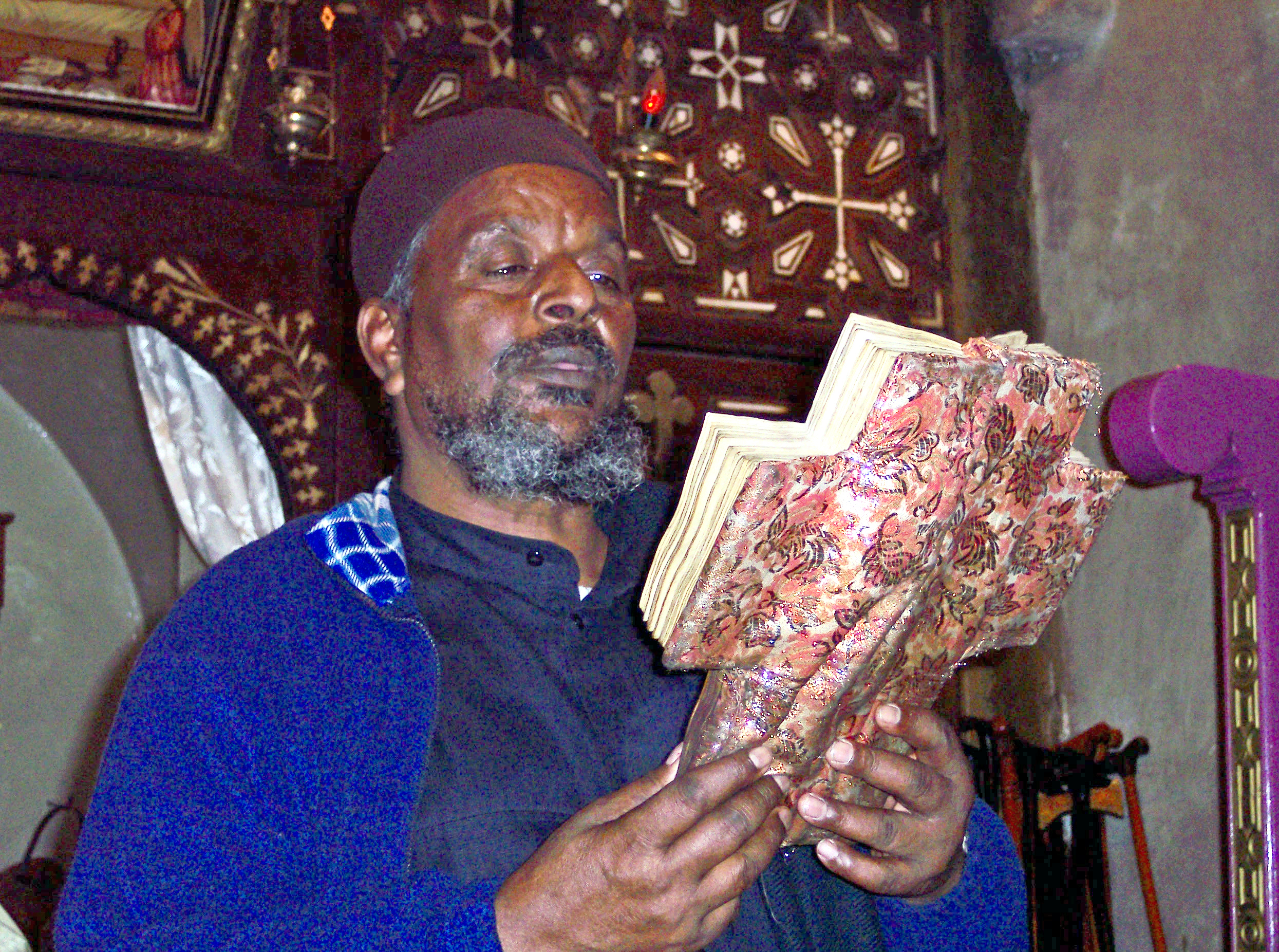
Something similar happened in Ethiopia. My wife Becky and I once had the opportunity to visit an Ethiopian Coptic Church in Israel. The priest we spoke with recalled the Church’s long history, pointing to a tapestry behind him depicting the Queen of Sheba’s visit to King Solomon (1 Ki 9). He then connected her story to a God-fearing Ethiopian who centuries later made his own pilgrimage to Jerusalem (Acts 8:26-40) and was baptized as a Jesus-follower. Both the Coptic Church and the Beta Israel community in that country have ancient roots.

In Wycliffe, we hear about these seeds all the time. Before a missionary sets out for the most distant place she can imagine, she needs to understand that God is there and working before she arrives. As I noted in my last post, there’s a second narrative: the purposes God is pursuing in the lives of the people before the missionary arrives. If you have any doubts, read Don Richardson’s 1981 classic, Eternity in Their Hearts

Faith can spring up in surprising contexts, standing out even more because of the darkness it’s set against. And dormant seeds that were sown centuries before can suddenly spring to life.

Do you have one of those stories, where you’ve seen God at work in unexpected places? I’d love to hear examples of God revealing a little spark of faith where we’d never expect it. Leave me a comment with your story.


Elijah series:

Unexpected testing

In my last post I looked at the remarkable sources of God’s provision for the prophet Elijah: God mobilizes scavengers, multiplies the assets of the poor and enables the marginalized to contribute. In doing so, God challenges the assumptions and mental blocks of the privileged and presumptive sources of provision—people like me. In fact, the story is told in a way I can identify with, because its focus is Elijah.

However, even as God is working his purposes in Elijah’s life, he’s also working in the widow’s life. He yearns for her to know him, and he’s using Elijah to bring about his purposes for her. The widow’s version of this story might read a lot differently, but there’s not much detail on which to build that retelling. So we try to read into the woman’s actions and the small handful of words captured in this story.

For instance, I would like to know if, when she enters the scene, she already has a spark of faith. Did God reveal in some way, prior to her meeting Elijah, his plan and calling to her? Even as she has lived on the edges of Israel’s border, has she been seeking Israel’s God? I also wonder how this widow responds to God’s daily miracle. 

In the previous act of this story (1 Ki 17:8-16), this widow took a leap of faith to trust the man of God. In this final act (1 Ki 17:17-24), she faces a crisis of faith. Just as things are starting to look hopeful, her son dies, and this setback seems to confirm her worst fears: that this God is just like all the others.9 For most people in her situation, there is no rags to riches outcome. She may even have been bracing for bad news because it figures, after the series of misfortunes she has experienced. Her words reveal her resentments and core beliefs: she asks Elijah what he has against her, but she’s really asking what God has against her. This loss might not be as painful if her heart hadn’t opened a bit.

It’s interesting that she raises the issue of sin (v18). Romans 5:13 tells us that “sin is not charged against anyone’s account where there is no law” (see also Rom 5:15); therefore, she’s not under the Hebrew Law. However, she understands in some way that she has missed the mark; she’s not in right standing with God. 

In that comment, she reveals that she understands sin has a price. But she also reveals that she was expecting grace, the primary characteristic of Yahweh she has personally experienced so far. In her pain and anger, she reveals a level of conviction and a fragile faith. 

Digging further, history tells us that worship of Baal sometimes required child sacrifice. Now the God of Israel seems to have taken her son. So again, is this God any different? It’s an enormous test of her faith, beyond what many fledgling believers could withstand. 

In fact, this is where Western believers sometimes get tripped up in their faith. Why would God allow this kind of trial when the woman’s faith is so fragile? It’s appalling to read stories like Jesus confronting the rich, young ruler and then watching him walk away (Matt 19:16-22) or offending his followers and chasing away those who weren’t serious (John 6:60-66). Why wouldn’t the God who doesn’t snuff out a smouldering wick or break a bent reed (Is 42:3) shelter this widow’s simple expression of faith until it’s strong enough to withstand a storm? What if her faith breaks? 

Elijah’s response suggests he has the same mindset; he even seems to be having his own crisis of faith. He doesn’t speak to the woman at all: no compassion expressed for her loss, but instead, a brusque, “Give me your son” and a march up the stairs to his room. His prayer reads to me as rather accusatory: God, did you bring tragedy on her? Did you kill the boy? Perhaps he expected his presence in her home to have brought her some kind of covering rather than make her life worse.

The passage says God listens—even to sullen, angry prayers like Elijah’s. Yet, for Elijah, the son’s resurrection was probably more of a relief than a moment of great joy. Maybe the woman’s faith will survive this crisis now.

Don’t miss the amazing faith in Elijah’s prayer; he asks God for something no one had ever dared to dream of before. Up until this moment, death was always the end. We get used to the New Testament stories, but this was the first recorded resurrection in the Bible.

Take a minute to read one of them: Luke 7:11-17. Jesus is traveling in Galilee when he encounters a funeral procession. The only son of a widow has passed away. Jesus raises the young man to life, then gives him to his mother. In this parallel story I see two insights into the Zarephath story.

First, Jesus responds with compassion and cares for the widow before addressing death. The contrast to Elijah’s bedside manner exposes where his response was lacking. Perhaps the difference is simply one of character and personality: Elijah was full of faith, but he was also a flawed individual who was prone to emotional ups and downs. But it also reveals power and knowledge: Jesus knew how the story would end, because even then he had authority over death, while Elijah was pleading for the impossible.

Second, we see the response of the witnesses: fear seizes them and they glorify God. They conclude two things: Jesus is a great prophet, and God has visited his people. The Sidonian widow concludes the same thing about Elijah and God:

  • She says, “Now I know.” She has experienced it herself.
  • She recognizes Elijah as a prophet—his words are truth, and in his mouth are the words of Yahweh.
  • When she identifies Elijah as a man of God, she refers to God as Elohim—the supreme God, the God of gods, the God over Baal.
  • The deeper message is a profession of her belief in God. She no longer refers to Yahweh as Elijah’s God, as she had in v12. God has visited her.

In God’s miraculous resurrection of her son, she encounters even greater power and even greater grace than she has been experiencing on a daily basis.

So why does God give her such an extreme test? I believe he knows that her faith can’t stay in its current condition. Elijah will soon be leaving, and she needs to be able to stand on her own feet. It is time for her to reach a decision about whether she and her household will believe, and serve the Lord (Josh 24:15).

I started this series researching to see how non-Westerners read this chapter. The North American approach would likely be to coddle such fragile faith by protecting the seedling, growing it carefully and guarding it from any real test in the early years. Many in the East and the South would say that’s unrealistic and point out that too much water or protection of a plant leads to shallow roots. Years later, when the plant is growing and should be mature, it is actually still fragile because of its roots. They would expect sacrifice, suffering and danger to come for a new believer, and rapid root growth is necessary for resilience.

We don’t know what happens with this woman after this. But her story can’t be looked at in isolation. Her line will now continue, and when seeds of faith are planted, you never know when they might pop back up again. We’ll look at that in our final post in the series.


References (intentionally seeking non-Western views)

9. Tse, Justin. “Elijah.” (Hong Kong) A Sermon for Revised Common Lectionary, Year C, Proper 5. Patheos. 27 July 2016. https://www.patheos.com/blogs/ecperson/2013/06/10/preaching-elijah/


Elijah series:

Great Expectations

As I read the Scriptures, leadership transitions catch my attention. That interest led me to the handoff from Elijah to Elisha. Elisha was an answer to Elijah’s prayer of despair in 1 Kings 19. He stuck to his mentor like glue in his final days. And he boldly asked to inherit Elijah’s mantle as he prepared to end his ministry. But the protege was quite a different character than the mentor.

To tell you the truth, while Elijah is one of my favorite characters in the Bible, I hadn’t spent much time on Elisha… until Scripture Union asked me to write a series of devotionals on this eccentric prophet for theStory. They’ve been publishing them throughout this week, with a handful more coming at the end of the month.

In spite of the crazy miracles Elijah performs, like fire from the sky, he seems much more accessible as a character. Indeed, Hebrews says Elijah was a man, just like me. He was deeply emotional, rising to accomplish great feats and crashing afterwards. Elisha, on the other hand, seems like such a bizarre figure. His miracles seem over the top and without much of a point: floating ax heads and curing food poisoning and raising the dead to life.

2 Kings 5 is an exception. In the story of Naaman’s healing by Elisha, a first read gives the impression that Elisha is cantankerous, reluctantly healing an enemy after denying him the fundamentals of respect and hospitality. But digging deeper, I begin to appreciate that Elisha fully understands the politics involved, desires a far deeper healing than Naaman anticipates, sets aside prejudices to cross cultures and shapes the circumstances to facilitate learning. In fact, because we can identify with the characters and motivations throughout this story, it still serves up learning opportunities today.

It seems to me that most of the issues in this story stem from false expectations. In this post, let’s look at the expectations around power and greatness.

Naaman is a man of discipline familiar with proper protocol in the corridors of power. His king must talk to Israel’s king, and he wouldn’t dare to suggest a solution to a man of such abilities as the king of Israel. However, the king of Israel misses the point, forgetting all the resources he has at his disposal. Instead, he feels the weight of expectations when he reads the King of Syria’s reference letter. “That Syrian king believes I can cure this man of leprosy! Does he think I’m God with power over life and death? He must be trying to pick a fight with me” (v7, CEV). Elisha hears that the king tore his robes (or perhaps heard the robes tear—see 2 Kings 6:12) and offers to take responsibility. His goal is that the Syrian will know that there is a prophet in Israel. Clearly, Israel’s king needed the reminder as well.

Then Elisha dashes Naaman’s expectations of the prophet himself and the methods he will use to heal. For a great man like Naaman, it follows that he will get healed by a great man like Elisha. His expectations sound like he’s been reading Harry Potter. But the lesson he learns is pure VeggieTales: little people can do big things, too. It’s a little slave girl who first commends Elisha to Naaman. Then, when Naaman is prepared to throw up his hands, his servants convince him to follow to the prophet’s simplistic healing routine. As my Bible notes point out, in order to be healed, he must become as a little child.

And here is where my own expectations are surprised. I expect to find faith, humility and servant leadership among the prophets and leaders of Israel, not from a Syrian visitor. Clearly, Naaman is a leader who’s revered by his staff. Even Jewish slaves, who by rights could hold grudges, seek his best. Naaman proves to be a leader who (eventually) listens to the “little people” around him. I once heard someone say that it’s the leader’s job to define who the heroes are. The heroes in this story are the overlooked and unnamed, not the great men.

In her devotional for theStory, Annabel Robinson notes this passage is “about God’s power, about ordinary people in divinely strategic positions, about humility and obedience, as God reveals his kingdom by loving and healing the outsider, the enemy, the Gentile.” And the Syrian.

Check out her post, The Upside-Down-Kingdom, and my subsequent devotionals on this unique prophet:

[This post republished from my President’s blog on Wycliffe.ca]

From “lording servants” to “stooping lords”

In 1970, Robert Greenleaf introduced a paradox that swept the business community: the idea of The Servant as Leader. Many leaders have picked up his books, embraced the concept and developed a servant leadership methodology. They do mind tricks like inverting the organizational chart, and they develop great management practices, all while missing Greenleaf’s point: he wasn’t writing to leaders.

Few recall that Greenleaf wasn’t suggesting that leaders should become servants. Rather,

The servant-leader is servant first… It begins with the natural feeling that one wants to serve first. Then conscious choice brings one to aspire to lead. That perhaps is sharply different from one who is leader first, perhaps because of the need to assuage an unusual power drive or to acquire material possessions….

The natural servant, the person who is servant first, is more likely to persevere and refine a particular hypothesis on what serves another’s highest priority needs than is the person who is leader first and who later serves out of promptings of conscience or in a conformity with normative expectations. (p50)

Greenleaf was starting with different building blocks: a different attitude, a different spirit, a different person who gets noticed and promoted. In this sense, Nehemiah was a great candidate for development. He learned servantship through years as an exiled cupbearer, attending to the needs of a foreign king. When he eventually aspired to lead, Nehemiah didn’t lose his sense of grounding and character. As a godly governor, he really believed his call was to serve and relieve the people, not add further burden upon them. He was a servant leader long before it became the rage.

So why did Nehemiah use his platform to critique both servants and leaders?

It turns out that even servanthood doesn’t guarantee the right attitude. In chapter 5, Nehemiah’s turns the harsh glare of his spotlight on his predecessors, who laid heavy burdens on the people. He doesn’t stop there, condemning their followers: “Even their servants lorded it over the people” (Neh 5:15).

That sentence just sticks in my craw! I can’t rationalize this seemingly-impossible paradox. How can servants lord it over anyone?

But we do, don’t we? We all leverage any power we can get. From the exaggeration regularly found in CVs to the length of a person’s title, we all use every tool at our disposal. There’s a constant temptation for the administrative support staff of any leader to use the influence of their boss to gain power for themselves. If we’re really honest, we’re all laid bare by this critic of the accepted business practice of his day.

How do we steer clear of lording servantship? What can we learn from Nehemiah?

1. The position doesn’t change the person.
The position of governor came with a high level of responsibility and expectations, one of which was hospitality. Chapter 5 tells us Nehemiah could anticipate as many as 150 gathering at his table any given day. He was a good host, assuring that they had the finest food and a selection of wines. He was a connoisseur, after all.

This was clearly a business expense, and it was a right his predecessors had readily used. In fact, to claim the allowance would not draw any attention, while refusing the perk could create headlines. Nehemiah chose to forego his rights.

Why? My pastor, Glen Nudd, notes:

There was something bigger going on in Nehemiah’s heart and mind than the opportunity to enjoy an enormous hospitality budget.

This decision alone demonstrates that Nehemiah did not change when he got a promotion. After stepping up to enormous responsibility and position, he didn’t forsake humility.

2. Followers pay a cost.
Pastor Nudd says any perk received by a person in a position is a tax, and taxes always have a cost.

No government programs are ever free; they have to be paid by someone.

Nehemiah perceived that the people already carried a heavy burden, and he wasn’t going to add to it. Instead, he sought to lighten it.

The ‘servant-style’ of godly leadership demands that we ask ourselves questions about privileges we’re given, offered, and expected to take and then to ask ourselves the question: ‘If I take advantage of that particular thing, could it potentially undermine my mission to serve those I’m leading?’

3. We are all followers.
What was Nehemiah’s motivation? Verse 15 says it was the fear of God. Because of his understanding of his position in relation to God, he knew his position in relation to the people.

Centuries later, Jesus would marvel at the faith of a Roman with high position willing to beg him to heal a highly-valued servant. This centurion told Jesus he was not worthy to have him step into his home, but knew he could heal with a word.

For I too am a man under authority, with soldiers under me. And I say to one, ‘Go,’ and he goes, and to another, ‘Come,’ and he comes, and to my servant, ‘Do this,’ and he does it.” (Matthew 8:9)

It’s easy to see the nature of authority in that quote. Sure, the centurion could tell people what to do. The key is that first phrase, “For I too am a man under authority.” If we know who we’re really serving, then we don’t abuse power; we handle authority and position with care. Servants don’t lord it over anyone.

4. Servants can “lead upwards.”
Followers usually emulate the behaviors and attitudes they see in their leaders. Nehemiah’s servants were right there with the people, rolling up their sleeves to lay stones in the wall. But what happens to followers who serve beneath a lording leader? Do they get a pass?

Chapter 3 draws out of obscurity the actual men and women who built the wall of Jerusalem. In the middle of this chapter, we see a case study of servants who plotted their own course. Verse 5 says the Tekoites repaired a specific part of the wall, and verse 27 adds that they went the extra mile, helping build a second section. They went above and beyond in spite of the example of those who should have been their role models. While the Tekoites put in the hard work, “their nobles would not stoop to serve their Lord” (Neh 3:5). What powerful phrasing, though a footnote is quick to point out the word “Lord” could also mean lords, or supervisors. Frankly, it’s all the same. When we serve our supervisors, our leaders and our followers, we’re serving our Lord (Eph 6:7).

Before Nehemiah ever aspired to lead, he revealed his posture and his heart. In his prayer in chapter 1, he used the word “servant” seven times. He put himself in good company with Moses and Israel as a “servant of the Lord.” It was easy for Nehemiah to think that way, because I’m convinced he thought the two words – “leader” and “servant” – were synonyms.

Nehemiah never undermined his mission. His character inspired a generation of Jewish leaders. His honest account in the book of Nehemiah influenced many generations to come. And as an exile in a hostile culture, he likely offered a striking contrast to the leadership style of an ungodly king in an ungodly culture. On that point alone, his life and his leadership are certainly relevant to us today.

Cautionary lessons from Moses

I want to spend a bit of time looking at two cautions in the leadership lessons of Numbers 11.

Do we cut God’s abilities short?

God answers the people’s request. He tells them he heard their complaint, and he’ll provide meat. But lest you read tenderness into this “answer to prayer,” God tells them they will have so much meat it will be coming out of their nostrils, and they’ll hate the sight of it! Moses is quick to point out the impracticality of God’s words. As you consider his hesitation and lack of faith, consider his track record with God. In Exodus 3, God said he heard Israel’s cry and had come to rescue them. Then he shocks Moses with his solution: “Now go, for I am sending you to Pharaoh” (v10) Here, when Moses hears God say he’ll provide meat, he’s probably thinking of all the work he’ll have to do to make it happen.

He learns a couple of important principles. One, God doesn’t work in the same way every time. This time is more like the plagues, when Moses sat back and watched. Two, he has to consider this fantastic question: “Has my arm lost its power?” Another version renders it, “Is my arm too short?” This is a very direct challenge to Moses’ faith, and a great question for leaders to consider.

In what ways do we cut short in our minds and in our planning the ability of God to work wonders? In what ways do we take on God’s responsibility as we lead his people (1 Peter 5:2)? It’s a dangerous thing to conclude, “If this is going to happen, I’m going to have to do it myself.” God makes it very personal for Moses: “Now you will see whether or not my word comes true!” (Numbers 11:23)

Do we take God at his word?

God has given us promises as leaders. He has given us general ones through Scripture and when he gives us a vision, he often accompanies it with overt and implied promises that are much more personal in nature. Part of leading is our own faith journey — our ability to take God at his word. This was the challenge Moses experienced at that moment of crisis.

Of course, God comes through in a miraculous way. Can you imagine seeing quail piled three feet deep and stretching a day’s journey in any direction? Can you imagine the number of birds? Moses couldn’t either.

Do our mistakes influence others?

Joshua only shows up once in this story, but there are several important points to consider. As Moses’ assistant “since his youth,” it’s clear that Moses identified his leadership ability early on and has mentored him for several years. But in this instance he earns a rebuke for attempting to protect Moses. Why?

I suspect he’s afraid of insurrection. With all the people whining, there could be danger in the fact that two leaders stayed behind in the camp rather than accept the invitation to join the other 68 at the Tabernacle. So Joshua begs Moses to stop those two from prophesying. Moses, on the other hand, points out that Joshua doesn’t need to be jealous for Moses’s sake. Moses knows he isn’t the point.

In addition to the natural tendency for an assistant to see himself as guardian of his boss’s honour, Matthew Henry suggests that Joshua would have been one of the seventy himself. He may well have been “jealous for the honour of their order.” In that moment, Joshua demonstrates a foundational flaw in his belief system. Could it be that he had a scarcity model, as if God’s Spirit going to others might dilute the power in each individual? Or could it be a desire for control, as if Moses could restrict or put parameters on God’s Spirit? In our most unguarded moments, our core beliefs become evident.

Most importantly, I suspect Joshua heard Moses whining. After all, other passages talk about how Joshua is a witness to the intimate conversations between God and Moses. He was the only other person allowed on Mount Sinai with Moses, and he was often in the tent of meeting as Moses and God talked face-to-face. So it’s reasonable to expect that he heard Moses complaining. While Moses quickly rebounds to leadership form, Joshua doesn’t recover quite as quickly. He’s clearly on the wrong side in this one, and Moses has to rebuke him. It’s a reminder that others can be drawn into and hurt by our sin and weakness. I’m all for vulnerability and modelling, but it can be both instructive and destructive.

The good news is that Joshua made his mistake before he stepped onto the leadership stage himself. It was a learning opportunity. And that is probably the greatest leadership lesson in this passage: we are all learners. Whether we’re already in that position of leadership and influence or on our way, we never stop growing in our understanding of God, our faith in him and our ability to lead. Thank God that he’s not finished with us, and he shows grace to help us learn from our mistakes.

Lincoln: The greater good

The struggle over the greater good revealed the character and leadership ability of Lincoln.

At first, Lincoln was mildly inspirational about his desire to see the thirteenth amendment passed. He was somewhat aloof, casting vision and attempting to cash in political capital. He struggled with his desire to end a war that had claimed 600,000 lives and yet the moral opportunity to change America forever for the good.

Honest Abe was very open with his cabinet about his struggles over legality. He showed vulnerability in pursuing the best course he could see at the time. Was he right to use war powers? Did he really have the ability to emancipate the slaves as seized property? He admitted that all those previous steps would leave him very much exposed if he didn’t take it all the way and win legal freedom for the slaves. In the end, his vulnerability won over his leadership team.

Then Lincoln struggled with the means. He tried to keep his hands clean, asking his Secretary of State to organize the dirty work himself. But when push came to shove, Lincoln abandoned deniability and realized the vote would fail without his personal involvement. He waded into the work to win votes, meeting personally with some key leaders who were on the fence.

He led from a broad base of input and used a broad range of tools. He sought input from voices as disparate as influential donors, a cabinet of political foes, soldiers both black and white, telegraph men and White House servants. He pushed, pulled, cajoled and won over. Only when he’d narrowed the gap to two votes at the eleventh hour did he attempt to bring his considerable power to bear.

In the end, he had to sit back and hope that he’d done enough. It was out of his control. Thankfully, it went the way he desired. But that’s leadership: you really only have influence, and then people make their own decisions.

This film was a completely different story than Amazing Grace, which detailed a 40-year peaceful struggle to free the slaves. But Lincoln was just as compelling a story and leadership profile. It left me thinking, and it left me inspired. Continue reading

Spiritual authority

A quick follow-up to my last post on positional and personal authority, lest you think I fell off the earth.

Personal authority includes spiritual authority. Let me give you an example from the biography I’ve just finished, Hudson Taylor and Maria, about the missionary pioneers to China. Author J.C. Pollock tries to parse the incredible influence of this frail, slight, poor and often-sick man so dedicated to his vision. Here’s how one of Taylor’s early recruits with the China Inland Mission puts it: “His strong yet quiet faith in the promises of Scripture, his implicit confidence in God, this it was which compelled submission on my part to whatever he proposed for me.”

Taylor had no social standing, positional power or imposing stature. Instead, it was his simple faith, total dependence on God and intimate prayer life, followed by unwavering dedication to his vision, that allowed him to achieve greatness.

Isaiah says the same thing about the Christ in Isaiah 53:2:

There was nothing beautiful or majestic about his appearance,
nothing to attract us to him.

Jesus didn’t attract followers because of his looks. (Aside: It’s an interesting thought to me that God didn’t bestow his ultimate creation with the looks of Brad Pitt.) He didn’t attract them for his stature or his magnanimous personality. He attracted them for completely different reasons. Some of the greatest men who ever lived follow in his footsteps: you wouldn’t notice them except for their incredible following.

Leadership requires followership

In October 2009, my shortest blog post (appropriately) asked how I could have 23 devoted Twitter followers if I’d never tweeted. The point being that you can’t follow a stationary object. Just for the record, I’ve decided to start tweeting, but I’m still working out my strategy. I don’t want to be a random tweeter. But that’s not the point I want to make here.

Over the last two years, I’ve tried to come up with working definitions of leadership and management. I’ve struggled with understanding where the murky swampland between the two firms up on either bank. And I’ve rejected numerous definitions as being too simplistic. Or too biased.

It hit me that the main requirement for leadership is that you have followers. That suggests two parts to a working definition:

  • First, it’s not about position, but about influence. Position or no position, whether you feel like a leader or not, it’s clear: if you have followers, you’re a leader. The opposite implication is just as true.
  • Second, you can’t have followers if you’re not moving. Therefore, leadership implies change.

Therefore, let me give the definitions a stab. Feel free to add your thoughts.

Leadership: the stewardship of one’s personal authority over others to set their pace and direction.

Management: the stewardship of one’s positional authority to maximize the use of resources toward the previously-set pace and direction.

A few clarifications. I don’t think it’s fair to say, as some do, that managers protect the status quo. Managers encourage movement toward the ends, but they don’t try to change the pace or define the direction as much as rearticulate the vision.

I also think it’s worth defining what I mean by personal authority and positional authority. These terms are attempts to specify the source of a leader’s influence, borrowed from Dr. Paul Hersey. Positional authority or power is the capacity to influence others by one’s dominant organizational position. In contrast, personal power is the capacity to influence others by one’s own being.

So, there you are. Give me your reaction to these definitions. With your help, maybe we can craft something worthwhile.

Suspect your ability to handle power

As I’ve been reading The Lord of the Rings to my boys, a series of moments stick in my mind: the times that Frodo seeks someone to give the ring to. Surely Aragorn or Gandalf or the Lady of Lothlorien would use the power benevolently to combat the evil of Sauron! Each one contemplates briefly the possibility of harnessing such amazing power and concludes that they wouldn’t be any less ruthless and horrific than previous owners. They therefore studiously avoid touching or looking at it, some even taking great satisfaction that they passed the test.

Last week at a leadership development event, we read together Henri Nouwen’s message, In the Name of Jesus. Nouwen is a Harvard man of great earthly success who ended up as a priest working among mentally handicapped people at the Daybreak community near Toronto. He cautions against the rationalization many Christians go through regarding power: that as long as it’s used to serve God and other human beings, it’s a good thing. He points out the irony that, throughout Church history,  followers of the one who emptied himself of power have used power for crusades, inquisitions, enslavement, opulence and manipulation of all kinds and forms. Then he cuts to the point.

What makes the temptation of power so seemingly irresistable? Maybe it is that power offers an easy substitute for the hard task of love. It seems easier to be God than to love God, easier to control people than to love people, easier to own life than to love life.

Wow. Whether you follow Nouwen’s logic and conclude that love is the opposite of power, his words sure slice deep. He’s right: it is easier to control than to love, and yet the latter is clearly God’s command for anyone, but in particular leaders. Nouwen spoke from a long personal journey into the messy world of loving those that our culture overlooks. Control and ownership are wrong methodologies arising from wrong motivations from a wronged heart. Nouwen continues,

One thing is clear to me: the temptation of power is greatest when intimacy is a threat. Much Christian leadership is exercised by people who do not know how to develop healthy, intimate relationships and have opted for power and control instead. Many Christian empire-builders have been people unable to give and receive love.

I remember when I worked in youth ministry that I lost count of the people who got into that field because of their own pain growing up. Few came from a healthy place and wanted others to share in that health; many more were on a personal journey to redemption and sought to help others avoid what they had experienced. But if you haven’t experienced real healing, how do you avoid temptations like power? I think Dan Allender has a lot of solutions in his book, Leading with a Limp. He suggests we confront our brokenness and allow God’s grace to redeem it. Failure and brokenness are not necessarily obstacles to leadership; they can be incredible motivators and a foundation for the right kind of servantly leadership. But those core needs must be addressed and the failures brought into the open.

Nouwen based much of his message on Peter’s example of being restored after abandoning and denying his friend and Rabbi Jesus. The lessons he learned on that beach in John 21 were to love deeply, receive love and give love to others. That was the basis for Peter’s leadership of the Church. It’s a lesson that many of his successors failed to get.

My boys were surprised when I told them I think of Lord of the Rings as a Christian story. I’m still teaching them the idea that a Christian story doesn’t mean that Jesus is a character, or that God is explicitly mentioned. Failure, redemption, fear, ambition, love, evil and desires are deeply woven into the story. And I think I can learn from the characters who suspected themselves and wouldn’t allow themselves to get near to raw, unbridled power.

Give power away

Control has a lot of appeal. It’s probably the reason most people get into leadership roles. But it’s overrated. The more complex the leadership settings I get into, the more I realize that there are so many factors that are utterly impossible to control. In Leading with a Limp, Dan Allender points out the illusions and pitfalls of trying to maintain control of complex situations, crises and chaos. Control is an illusion, he says. A controlling leader tries to limit chaos and uncertainty. Instead, they should be embraced as part of the creative process.

The only solution I’ve found to the pitfalls of control is to give it away. Not to have it taken by prying apart my dead fingers, but to consciously choose to give it away. Give what away? Over the next few posts, I’ll unpack a couple of ideas.

Give power away

Autocratic leadership is a trap. It is self-limiting. The only way to accomplish all that we’re asked to do as leaders is to empower those around us to make decisions.  In The Leadership Jump, Jimmy Long says:

Existing leaders have to realize that we are not the only ones who can drive; there are younger leaders who know how to drive better in this new and increasingly technological culture.

Long calls these emerging leaders “indigenous people.” To one who appreciates technology but is never completely comfortable with it, that phrase says it all. Call me “crosscultural.”The fact is that those from younger generations can do things in their sleep that require a lot of effort from those of us from earlier generations.

Long goes on to draw from a Harvard Business Review article by Deborah Ancona called “In Praise of the Incomplete Leader.”

As existing leaders are willing to admit that they are incomplete and need others, and are willing to share the leadership with others on the team, then together they can get extraordinary things done.

Team leadership breaks past any one leader’s limitations. But let’s get practical. How do you get started? Long suggests offering well-structured questions to draw emerging leaders into the process of discovering the answers together. Dr. Steven Sample offers another simple but radical suggestion in The Contrarian’s Guide to Leadership: never make a decision that could be made by someone else. In other words, continually push decisions down. You’ll accomplish a lot more while you’re in your position, and you’ll leave your mark on the next few generations of leaders.

Long again:

We actually gain power by giving it away. It is a different kind of power. Instead of it being the power of control, it is the power of relationship, the power of shared decision making, the power of blessing.