Unexpected faith

As I began to unpack in my last post, it’s easy to think that faith thrives when the environment shelters it. However, faith actually suffers when roots don’t need to run deep. There’s something about hostile or dry environments that draws out deep faith.

And when faith springs up and flowers in dark places, it shines even brighter. 

The Bible puts Sidon firmly in the “dark” category. The region became wealthy through the trading done by their sea merchants, and the triumvirate of Isaiah, Jeremiah and Ezekiel all predict Sidon’s downfall for her sins against God (Is 23; Jer 25:15-22; Ez 28:20–24). But it turns out that the widow’s faith is not exceptional; it’s actually part of a pattern. 

First, Yahweh’s Temple is built with Sidonian cedar (1 Chron 22:4). How did that happen? While God intended for Joshua to drive out the peoples in modern-day Lebanon (Josh 13:6), the Sidonians were among those who remained as a thorn in Israel’s side (Judg 3:1-4). But when King David sets up a system of tribute and forced labor for many of these tenacious peoples, he instead works out a cooperative relationship with Sidon and Tyre. 1 Kings 5 records that the king of Tyre loves David so much that he willingly contributes huge amounts of cedar and woodworkers to build the Temple. 

Jumping to the New Testament, Jesus shames the Galileans by telling them that if Sidon had seen the miracles he performed among them, they would have repented quickly (Matt 11:21). Clearly he sees them as spiritually open and much more willing to accept his words than his own people are. Indeed Luke 6:17 notes that large numbers of people from Sidon come to hear him preach and be healed. 

Then in Mark 7:24-30 and Matthew 15:21-28, Jesus brings his disciples to the area for a retreat. They’ve been running flat out, and John the Baptist has been martyred. Jesus intends to give them a break in a resort town, but a local woman recognizes Jesus and pesters his disciples relentlessly about her daughter’s demonic possession. Jesus first puts her off by saying his primary mission is to Israel. But her tenacity, her submission and her scrappy logic impress him. Jesus responds, “Woman, you have great faith!” He then rewards this faith by healing her daughter. The receptivity of this audience seems to change Jesus’ priorities in the short term. The next thing Jesus does is head for the Gentile region east of the Sea of Galilee. In fact, Jesus never commends the faith of anyone in Israel, but only among foreigners (for instance, Matthew 8:10). 

So the Sidonian widow is not really an aberration. There are a number of reasons why this woman might find Israel’s God appealing:

  • Power: Baal, her people’s god of harvest, seems powerless to defeat Yahweh’s control over the rain.
  • Compassion: Israel’s God shows himself willing to hear the cry of widows and orphans, even foreign ones. As Exodus 22:21–23 says: “Do not mistreat or oppress a foreigner, for you were foreigners in Egypt. Do not take advantage of the widow or the fatherless. If you do and they cry out to me, I will certainly hear their cry.” 
  • Grace: She’s encountering grace on a daily basis. In spite of her sin, Elijah and his God are still providing for her rather than judging her.

There’s something about Sidon, this land in such close proximity to God’s people, struggling to hold onto its beliefs and stand against Israel’s religion. Spiritual sensitivity and hungry seekers keep popping up from that region throughout the Bible. Perhaps this is the ultimate answer to Jesus’ provocative question to the Jews: if there were lots of widows in Israel, why did God use a widow in Sidon? (Luke 4:25-26). 

But what if these aren’t one-off examples? What if the roots are connected? What if the widow is open to Yahweh because of David’s kindness to King Hiram? What if the woman with the demon-possessed daughter reaches out to Jesus because the story of that widow was embedded in her culture? A seed had been planted centuries before.
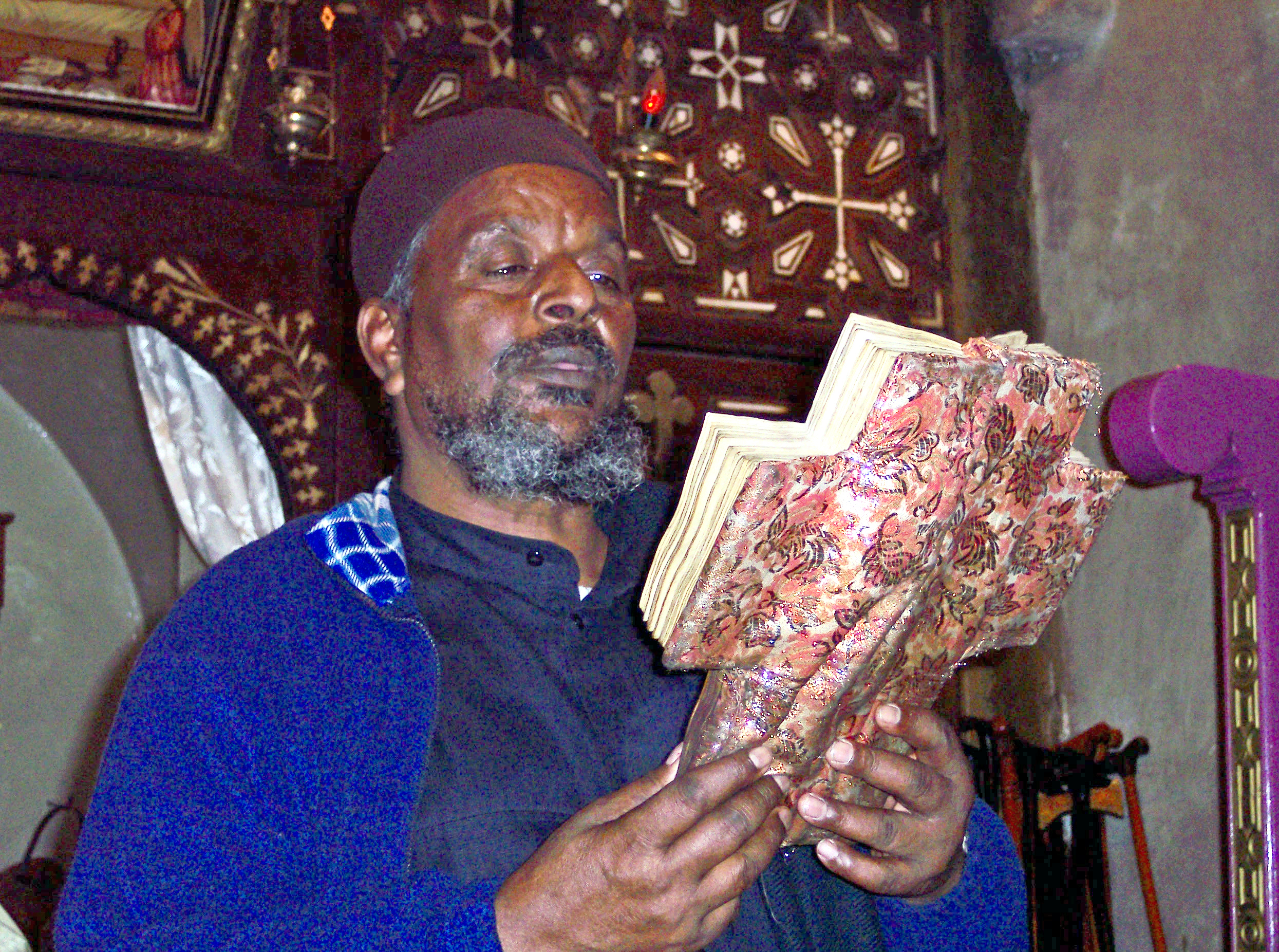
Something similar happened in Ethiopia. My wife Becky and I once had the opportunity to visit an Ethiopian Coptic Church in Israel. The priest we spoke with recalled the Church’s long history, pointing to a tapestry behind him depicting the Queen of Sheba’s visit to King Solomon (1 Ki 9). He then connected her story to a God-fearing Ethiopian who centuries later made his own pilgrimage to Jerusalem (Acts 8:26-40) and was baptized as a Jesus-follower. Both the Coptic Church and the Beta Israel community in that country have ancient roots.

In Wycliffe, we hear about these seeds all the time. Before a missionary sets out for the most distant place she can imagine, she needs to understand that God is there and working before she arrives. As I noted in my last post, there’s a second narrative: the purposes God is pursuing in the lives of the people before the missionary arrives. If you have any doubts, read Don Richardson’s 1981 classic, Eternity in Their Hearts

Faith can spring up in surprising contexts, standing out even more because of the darkness it’s set against. And dormant seeds that were sown centuries before can suddenly spring to life.

Do you have one of those stories, where you’ve seen God at work in unexpected places? I’d love to hear examples of God revealing a little spark of faith where we’d never expect it. Leave me a comment with your story.


Elijah series:

Unexpected testing

In my last post I looked at the remarkable sources of God’s provision for the prophet Elijah: God mobilizes scavengers, multiplies the assets of the poor and enables the marginalized to contribute. In doing so, God challenges the assumptions and mental blocks of the privileged and presumptive sources of provision—people like me. In fact, the story is told in a way I can identify with, because its focus is Elijah.

However, even as God is working his purposes in Elijah’s life, he’s also working in the widow’s life. He yearns for her to know him, and he’s using Elijah to bring about his purposes for her. The widow’s version of this story might read a lot differently, but there’s not much detail on which to build that retelling. So we try to read into the woman’s actions and the small handful of words captured in this story.

For instance, I would like to know if, when she enters the scene, she already has a spark of faith. Did God reveal in some way, prior to her meeting Elijah, his plan and calling to her? Even as she has lived on the edges of Israel’s border, has she been seeking Israel’s God? I also wonder how this widow responds to God’s daily miracle. 

In the previous act of this story (1 Ki 17:8-16), this widow took a leap of faith to trust the man of God. In this final act (1 Ki 17:17-24), she faces a crisis of faith. Just as things are starting to look hopeful, her son dies, and this setback seems to confirm her worst fears: that this God is just like all the others.9 For most people in her situation, there is no rags to riches outcome. She may even have been bracing for bad news because it figures, after the series of misfortunes she has experienced. Her words reveal her resentments and core beliefs: she asks Elijah what he has against her, but she’s really asking what God has against her. This loss might not be as painful if her heart hadn’t opened a bit.

It’s interesting that she raises the issue of sin (v18). Romans 5:13 tells us that “sin is not charged against anyone’s account where there is no law” (see also Rom 5:15); therefore, she’s not under the Hebrew Law. However, she understands in some way that she has missed the mark; she’s not in right standing with God. 

In that comment, she reveals that she understands sin has a price. But she also reveals that she was expecting grace, the primary characteristic of Yahweh she has personally experienced so far. In her pain and anger, she reveals a level of conviction and a fragile faith. 

Digging further, history tells us that worship of Baal sometimes required child sacrifice. Now the God of Israel seems to have taken her son. So again, is this God any different? It’s an enormous test of her faith, beyond what many fledgling believers could withstand. 

In fact, this is where Western believers sometimes get tripped up in their faith. Why would God allow this kind of trial when the woman’s faith is so fragile? It’s appalling to read stories like Jesus confronting the rich, young ruler and then watching him walk away (Matt 19:16-22) or offending his followers and chasing away those who weren’t serious (John 6:60-66). Why wouldn’t the God who doesn’t snuff out a smouldering wick or break a bent reed (Is 42:3) shelter this widow’s simple expression of faith until it’s strong enough to withstand a storm? What if her faith breaks? 

Elijah’s response suggests he has the same mindset; he even seems to be having his own crisis of faith. He doesn’t speak to the woman at all: no compassion expressed for her loss, but instead, a brusque, “Give me your son” and a march up the stairs to his room. His prayer reads to me as rather accusatory: God, did you bring tragedy on her? Did you kill the boy? Perhaps he expected his presence in her home to have brought her some kind of covering rather than make her life worse.

The passage says God listens—even to sullen, angry prayers like Elijah’s. Yet, for Elijah, the son’s resurrection was probably more of a relief than a moment of great joy. Maybe the woman’s faith will survive this crisis now.

Don’t miss the amazing faith in Elijah’s prayer; he asks God for something no one had ever dared to dream of before. Up until this moment, death was always the end. We get used to the New Testament stories, but this was the first recorded resurrection in the Bible.

Take a minute to read one of them: Luke 7:11-17. Jesus is traveling in Galilee when he encounters a funeral procession. The only son of a widow has passed away. Jesus raises the young man to life, then gives him to his mother. In this parallel story I see two insights into the Zarephath story.

First, Jesus responds with compassion and cares for the widow before addressing death. The contrast to Elijah’s bedside manner exposes where his response was lacking. Perhaps the difference is simply one of character and personality: Elijah was full of faith, but he was also a flawed individual who was prone to emotional ups and downs. But it also reveals power and knowledge: Jesus knew how the story would end, because even then he had authority over death, while Elijah was pleading for the impossible.

Second, we see the response of the witnesses: fear seizes them and they glorify God. They conclude two things: Jesus is a great prophet, and God has visited his people. The Sidonian widow concludes the same thing about Elijah and God:

  • She says, “Now I know.” She has experienced it herself.
  • She recognizes Elijah as a prophet—his words are truth, and in his mouth are the words of Yahweh.
  • When she identifies Elijah as a man of God, she refers to God as Elohim—the supreme God, the God of gods, the God over Baal.
  • The deeper message is a profession of her belief in God. She no longer refers to Yahweh as Elijah’s God, as she had in v12. God has visited her.

In God’s miraculous resurrection of her son, she encounters even greater power and even greater grace than she has been experiencing on a daily basis.

So why does God give her such an extreme test? I believe he knows that her faith can’t stay in its current condition. Elijah will soon be leaving, and she needs to be able to stand on her own feet. It is time for her to reach a decision about whether she and her household will believe, and serve the Lord (Josh 24:15).

I started this series researching to see how non-Westerners read this chapter. The North American approach would likely be to coddle such fragile faith by protecting the seedling, growing it carefully and guarding it from any real test in the early years. Many in the East and the South would say that’s unrealistic and point out that too much water or protection of a plant leads to shallow roots. Years later, when the plant is growing and should be mature, it is actually still fragile because of its roots. They would expect sacrifice, suffering and danger to come for a new believer, and rapid root growth is necessary for resilience.

We don’t know what happens with this woman after this. But her story can’t be looked at in isolation. Her line will now continue, and when seeds of faith are planted, you never know when they might pop back up again. We’ll look at that in our final post in the series.


References (intentionally seeking non-Western views)

9. Tse, Justin. “Elijah.” (Hong Kong) A Sermon for Revised Common Lectionary, Year C, Proper 5. Patheos. 27 July 2016. https://www.patheos.com/blogs/ecperson/2013/06/10/preaching-elijah/


Elijah series:

Where angels fear to tread

Steve Moore’s list included a good indicator of early leadership that’s worth commenting on: individuals who are willing to take on a challenge others won’t. The ones who show initiative to take advantage of opportunity. The ones whose resistance to risk is overtaken by a compulsion that someone has to do something.

Leaders sometimes appear to come out of nowhere with a sudden success. I suspect I know what Malcomb Gladwell would say: that there are no overnight successes, and the individual has put in a lot of hours beforehand that led to such “instance success.” I agree. I think it’s easier to spot failure than to spot competence, and individuals like these have likely shown signs of potential along the way. What gets them noticed is the turnaround situation where they made something out of nothing.

There’s a well-worn piece of advice that seems relevant: Fools rush in where angels fear to tread. Remember that line from Amazing Grace, where a 24-year-old William Pitt first proposes to William Wilberforce that he thinks he can make a run at prime minister?

Wilberforce: No one of our age has ever taken power.
Pitt: Which is why we’re too young to realize certain things are impossible. Which is why we will do them anyway.

Some watch that movie and get inspired by Wilberforce; I get inspired by Pitt. Wilberforce succeeded through persistence and endurance; Pitt succeeded by sheer audacity. Perhaps he was a fool, but maybe that’s the point. In Moore’s recent book, While You Were Micro-Sleeping, he makes the point that experts and elitists “can’t ask the dumb questions that often trigger new ideas.” Most innovations come from fools.

Certainly, the pessimism born from experience becomes a block to innovation, but I think there’s another factor at work than just being too young to show caution. I think it’s a matter of conviction and motivation — that sometimes a situation is so dire, with no one willing to take it on, that a young person decides the worst they can do is fail. They have less to lose. Or that a frustrated young leader who never gets opportunity sees in a challenge a chance to go all in. With great risk comes great reward. We can probably all think of young leaders who took on big challenges and came out of nowhere to lead a new era. These are the kinds of stories we love.

But what about the other side? The stories of those who try and fail — or who never try — don’t get told. The younger generations have been long characterized as having an unhealthy fear of failure. Pessimism and skepticism is just as rampant among the young as it is among the old. I’ve had conversations with three young leaders in the past month who have recently faced choices: one relatively safe and one with greater risk. In all three cases, the young leader has opted for safety. There are good reasons for their decisions. No one would question their logic. But I’m disappointed.

Here’s the thing. Organizations need young leaders to step up. Hierarchical organizations need young leaders who master relational influence over positional authority. High-process organizations need young leaders who push back on bureaucracy and ask uncomfortable questions. Monocultural organizations need trailblazers who easily bridge cultures. And older, established organizations need age diversity.

What it comes down to is that the world doesn’t need an older you. The world needs young leaders who are willing to step up and take on the unique challenges we’re facing… today.

Taking yourself seriously

As I was walking into the office a couple of weeks ago, I noticed that a young leader was wearing a blazer… again. In a pretty casual department his attire stood out. Turns out he’s been dressing up consistently since the new year. When I asked about it, the response was that he’s trying to take himself more seriously.

Taking yourself seriously is a quality worth adding to our list of early seeds of leadership. There are a number of indicators that a person is preparing himself for future roles. At the earliest stage, this might include dressing up. It might also include a desire to spend time with senior leaders. Let’s look at a few examples.

When I was visiting with another organization recently, one of the senior leaders pointed out what first stood out to him about their youngest vice president: he had never been intimidated by leaders at the highest levels, instead choosing to interact with them… and ask lots of questions. I’ve seen this kind of thing myself when the board or senior leadership team gathers. A few young, rising leaders inevitably show up at break times.

A fortysomething leader came to me one day and told me he was considering throwing his hat in the ring to be considered for a promotion. He asked me what I thought. Among other things, I asked him if he considered people at that next level to be colleagues. How comfortable was he with walking into their office to have a conversation? Realizing that he was already at ease at that level was one factor in his decision to pursue a new leadership position.

What it comes down to is whether someone acts like the position they see themselves serving in.

I’m not talking about people who “sell out” to get a position. I think authenticity is extremely important in leadership. In fact, when I moved into the Offices of the President a year ago, I went to two people who knew me well and gave them permission to call me on it if they ever saw me becoming a clone of those I work around. If I ever become someone else in an attempt to get ahead, I want friends who are close enough to point out my hypocrisy.

What I’m talking about is the way David, hiding out in a cave in the wilderness, acted like the king he would become. His circumstances didn’t matter, and he didn’t let the group of misfits surrounding him bring him down to their level. He behaved in a manner suited to a king, and in so doing, laid a course for the way he would act as king.

Gifted to lead

Let me loop back and unpack one of Tim Elmore’s seeds: leadership gifting.

In my experience with the Threshing Floor, I’ve seen all kinds of potential in leaders. Leadership is seldom positional at its beginning, though I’ll grant that some didn’t know they were leaders until they were thrust into the deep end. More often, the thing to look for is an interest in, gifting for or calling to leadership. I blogged on the subject last year, focusing more on interests and abilities.

But how do you identify leadership gifting? What are its earliest seeds? Does someone who’s gifted necessarily know it? In my experience, they don’t always know it, and it takes someone alert enough to recognize the signs. To show a lot of patience with a young person who asks lots of questions. To allow failure — even encourage it — in someone who shows a lot of initiative and then take the time to debrief and stir them to try again. To spot a learner who’s unafraid of feedback or even seeks it, and then to reward it with well-thought-out, specific feedback.

I remember a few years ago I sought out the opportunity to work with a collection of individuals that was discouraged but talented. When I considered taking this position, I looked specifically at one young leader who had a huge amount of passion and an amazing ability to encourage others, but for some reason rubbed some people the wrong way. He had a reputation for success, but was sometimes too quick to make an end run if he ran into an obstacle. I think it’s safe to say that some in leadership considered him a thorn in their side. Yet when I moved on to another position, his potential won out; he ended up moving up to take some of my responsibilities.

At one point I sent him to a week-long leadership event that utilized an anonymous 360 review. I decided to be very specific in my feedback, believing that to move to the next level there were some things he needed to work on and sensing that he would approach this opportunity with a hunger to learn. In talking with him afterwards, he thanked me for the feedback and suggestions I had made. He knew exactly which comments came from me. Why? Because he knew I would always be completely honest with him, and my comments stood out among the feedback he’d received.

Now, this was an individual who knew he was a leader. I’d love to hear your stories about how you spot leadership gifting in someone who doesn’t recognize their gifts.

The seeds of leadership

What should we look for in a potential leader who has not emerged yet?

Last year, Steve Murrell posted Tim Elmore’s list of traits he looks for in those he seeks to train in leadership:

  • gifted to lead
  • influential with people
  • fruitful even before they have a leadership position
  • trustworthy in small things
  • serving in some capacity already

This a a great starting point. The first one is a bit nebulous and probably becomes evident only as you look at the other bullets. The last three are certainly related. The idea is that leadership is scalable. Someone who uses relational and spiritual authority to bear fruit without the position is likely to be even more effective once they have positional authority. Jim Collins says as much in his monograph Good to Great and the Social Sectors. So look for fruit, even in the smallest things.

I’m intrigued by the sports management business. Trades, drafts and coaching hires are compelling to me, because general managers are searching for hidden gems. You’ll often see a general manager trade “too much” for a pitcher who was average in the minor leagues or who had a losing record with another team. It’s evident that they see something they can work with in the middle of failure. That’s the job of an established leader: to mine for talent among those with less experience.

When you think of potential leaders in your setting, what are the seeds you look for?