Unexpected faith

As I began to unpack in my last post, it’s easy to think that faith thrives when the environment shelters it. However, faith actually suffers when roots don’t need to run deep. There’s something about hostile or dry environments that draws out deep faith.

And when faith springs up and flowers in dark places, it shines even brighter. 

The Bible puts Sidon firmly in the “dark” category. The region became wealthy through the trading done by their sea merchants, and the triumvirate of Isaiah, Jeremiah and Ezekiel all predict Sidon’s downfall for her sins against God (Is 23; Jer 25:15-22; Ez 28:20–24). But it turns out that the widow’s faith is not exceptional; it’s actually part of a pattern. 

First, Yahweh’s Temple is built with Sidonian cedar (1 Chron 22:4). How did that happen? While God intended for Joshua to drive out the peoples in modern-day Lebanon (Josh 13:6), the Sidonians were among those who remained as a thorn in Israel’s side (Judg 3:1-4). But when King David sets up a system of tribute and forced labor for many of these tenacious peoples, he instead works out a cooperative relationship with Sidon and Tyre. 1 Kings 5 records that the king of Tyre loves David so much that he willingly contributes huge amounts of cedar and woodworkers to build the Temple. 

Jumping to the New Testament, Jesus shames the Galileans by telling them that if Sidon had seen the miracles he performed among them, they would have repented quickly (Matt 11:21). Clearly he sees them as spiritually open and much more willing to accept his words than his own people are. Indeed Luke 6:17 notes that large numbers of people from Sidon come to hear him preach and be healed. 

Then in Mark 7:24-30 and Matthew 15:21-28, Jesus brings his disciples to the area for a retreat. They’ve been running flat out, and John the Baptist has been martyred. Jesus intends to give them a break in a resort town, but a local woman recognizes Jesus and pesters his disciples relentlessly about her daughter’s demonic possession. Jesus first puts her off by saying his primary mission is to Israel. But her tenacity, her submission and her scrappy logic impress him. Jesus responds, “Woman, you have great faith!” He then rewards this faith by healing her daughter. The receptivity of this audience seems to change Jesus’ priorities in the short term. The next thing Jesus does is head for the Gentile region east of the Sea of Galilee. In fact, Jesus never commends the faith of anyone in Israel, but only among foreigners (for instance, Matthew 8:10). 

So the Sidonian widow is not really an aberration. There are a number of reasons why this woman might find Israel’s God appealing:

  • Power: Baal, her people’s god of harvest, seems powerless to defeat Yahweh’s control over the rain.
  • Compassion: Israel’s God shows himself willing to hear the cry of widows and orphans, even foreign ones. As Exodus 22:21–23 says: “Do not mistreat or oppress a foreigner, for you were foreigners in Egypt. Do not take advantage of the widow or the fatherless. If you do and they cry out to me, I will certainly hear their cry.” 
  • Grace: She’s encountering grace on a daily basis. In spite of her sin, Elijah and his God are still providing for her rather than judging her.

There’s something about Sidon, this land in such close proximity to God’s people, struggling to hold onto its beliefs and stand against Israel’s religion. Spiritual sensitivity and hungry seekers keep popping up from that region throughout the Bible. Perhaps this is the ultimate answer to Jesus’ provocative question to the Jews: if there were lots of widows in Israel, why did God use a widow in Sidon? (Luke 4:25-26). 

But what if these aren’t one-off examples? What if the roots are connected? What if the widow is open to Yahweh because of David’s kindness to King Hiram? What if the woman with the demon-possessed daughter reaches out to Jesus because the story of that widow was embedded in her culture? A seed had been planted centuries before.
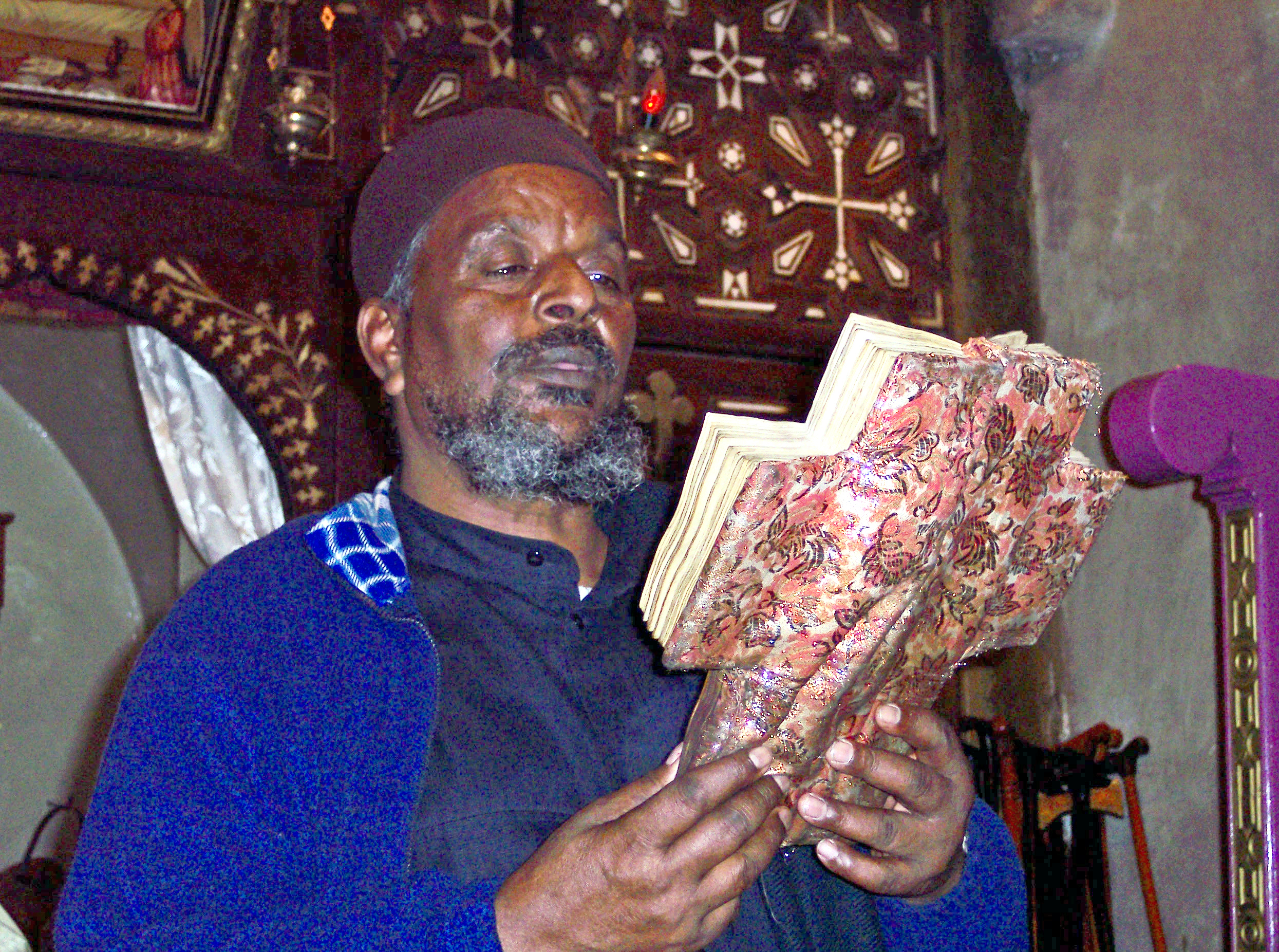
Something similar happened in Ethiopia. My wife Becky and I once had the opportunity to visit an Ethiopian Coptic Church in Israel. The priest we spoke with recalled the Church’s long history, pointing to a tapestry behind him depicting the Queen of Sheba’s visit to King Solomon (1 Ki 9). He then connected her story to a God-fearing Ethiopian who centuries later made his own pilgrimage to Jerusalem (Acts 8:26-40) and was baptized as a Jesus-follower. Both the Coptic Church and the Beta Israel community in that country have ancient roots.

In Wycliffe, we hear about these seeds all the time. Before a missionary sets out for the most distant place she can imagine, she needs to understand that God is there and working before she arrives. As I noted in my last post, there’s a second narrative: the purposes God is pursuing in the lives of the people before the missionary arrives. If you have any doubts, read Don Richardson’s 1981 classic, Eternity in Their Hearts

Faith can spring up in surprising contexts, standing out even more because of the darkness it’s set against. And dormant seeds that were sown centuries before can suddenly spring to life.

Do you have one of those stories, where you’ve seen God at work in unexpected places? I’d love to hear examples of God revealing a little spark of faith where we’d never expect it. Leave me a comment with your story.


Elijah series:

Unexpected provision

In my previous post, I looked at Elijah’s preparation for this moment when God will bring three people together to provide for each others’ needs. Read along in 1 Kings 17:7-16.

Now we meet a Sidonian mother who is the very picture of dependency. This woman might be described as “house poor”: living in a 2-storey house big enough for a guest room4 in a resort town suggests she may once have had a better life.5 She lives in a paternalistic society, where widows lack legal rights outside of bearing a son.3 The book of Ruth gives us a glimpse of the life of a couple of widows, and the bitterness Naomi felt from the way her life turned out (Ruth 1). On top of that, the way she sees the world is likely framed by a narrative like this one: her people have been marginalized for centuries; Joshua, David and Solomon were not able to dislodge them from their land,5 and they have a long history of worshiping a god who angers Yahweh. So she’s stigmatized and oppressed by Elijah’s people, and she’s caught downstream from a political and religious battle between those in power.

Think of all the minoritized demographics all wrapped up in this one woman! Take a minute to absorb the context and put yourself in her shoes. Feel her hunger pangs and her concern for her son. And consider why she’s outside the gate of the city gathering sticks. 

It’s remarkable to think about the sources God summons to meet Elijah’s needs. So often we form our own idea of how God will provide, or we even strategize as if God needs our suggestions. But the God described as owning the cattle on a thousand hills (Ps 50:10) shows here that he can mobilize that provision through the most unexpected conduits. As Jesus asks rhetorically (Luke 4:25-26), why would God choose this woman of all possible providers for Elijah? If it had to be a widow, there were Jewish widows and even wealthy widows. Everything is upside down from our expectations.

How would this widow in a Baal-worshipping region respond to God’s command? We know the birds will obey their Creator, but will she? Funny enough, the text doesn’t tell us whether God briefed her on her role. It’s difficult to interpret in the brief clips of conversation whether she was sarcastic or resentful or open. I’ve tried reading them with different tones of voice.

Her provision starts with hospitality for the weary prophet. When Elijah comes to her, she welcomes him… to some degree. To western ears, his requests seem rude.4 For instance, his first request for water is basic, but note that he’s asking for the very resource that he’s responsible for making rare and overpriced! To eastern ears, her response is rude. She skips a number of steps of hospitality expected in that culture—such as inviting him to rest or giving him water to wash his feet after his journey—some of which were affordable even to one living at her level of poverty.5

Elijah’s requests come with a promise (v14), but they’re a big leap of faith for this woman: a third of her last meal, and he must have the first portion. Why should she believe the promise of the God of Israel, a foreign deity? Perhaps it’s desperation that forces her to place her trust in the word of “Yahweh-is-God.” Joseph Bayode observes about this decision point6:

She had every reason to say no. She was desperate. She had a child to protect. She had only enough for one last supper and a slow, sorrowful death. But instead of resisting, she obeyed. She gave out of her lack, not her abundance. And in that moment, her faith triggered divine provision.

The Sidonian widow has to make two leaps: Elijah’s God can be her provider, but he also intends for her to be a provider.7 What mental and cultural barriers does the Sidonian widow overcome to say yes? 

Perhaps more relevant to us, what mental and cultural barriers does Elijah have to overcome to receive God’s provision from this woman? What does this man of power, access and comparative wealth have to learn in order to receive help?

I’m struck by the empathy required in God’s solution. First, Elijah becomes equal with the woman and her son. The Old Testament regularly lumps foreigners, the fatherless and widows as similar vulnerable populations under legal protection4 (see examples such as Dt 10:18-19 and 24:17-21). For all the power, influence and relative wealth Elijah possesses, he is no different from her.

Second, the next weeks and years ahead are a matter of daily faith and struggle, because God doesn’t provide all at once. Oil and flour that never run dry are not a source of wealth building, but a means of daily subsistence requiring continued faith. 

The three have to negotiate a co-existence. In order for Elijah’s needs to be met, God forces him to wade into the woman’s world of poverty—not aloof or indifferent, but showing concern about her daily need.8 Digging out of a poverty cycle is not a quick or easy thing. He has to walk with her as she wrestles free of the multiple levels of material, mental, emotional and spiritual poverty. He is an expression of Immanuel—God with us—to this woman.

It leaves me wondering: What mental blocks do we need to challenge as we think about sources of provision? What if God wants to move his Church away from an unhealthy dependence on Western funding? And what if he wants to challenge our view of wealth as a prerequisite for provision. It’s counter-intuitive, but God has all the resources, and sometimes he directs them through surprising conduits.

This story shows that everyone can participate in his mission. There’s a great example in 2 Corinthians 8:1-5, when the first-generation Macedonian churches, in their poverty and youthful passion, begged for the privilege of contributing to God’s work. God has a very different view of assets than we do. He often starts with what’s in our hands, as he did with Moses and his staff (Ex 4:2). And as he does here with the flour and oil. He’s the originator of the asset-based-development strategy. 

For that matter, what about sources of truth and sources of authority? We’re living in a day when the center of Christianity has moved outside the West. The centers of influence for the global Church are now in places with a much younger Church. Are we willing to receive calls to Biblical orthodoxy from places like Rwanda and Ghana? Are we willing to be challenged by the development of Indigenous theology coming out of Brazil and Indonesia?

As leaders, it’s a good time to re-orient our posture toward this new era for the Church. Ask yourself: what mental barriers you need to break in order to be ready for what God wants to do?


Reference (intentionally seeking non-Western views)
3. Seifert, Marlon. (Brazil)
4. van der Walt, J.S. (South Africa)
5. Gafney, Wil. (U.S., African American) “Hermeneutics of Reversal: Widow of Zarephath.” Womanists Wading in the Word. 18 March 2022. https://www.wilgafney.com/2022/03/18/hermeneutics-of-reversal-widow-of-zarephath/
6. Bayode, Joseph. (Nigeria) “The Widow of Zarephath.” Medium. 4 May 2025  https://medium.com/@JosephBayode/the-widow-of-zarephath-38c8957dc5a2
7. Claassens, Juliana. (South Africa) “Commentary on 1 Kings 17:8-16.” Working Preacher. 8 Nov 2009. https://www.workingpreacher.org/commentaries/revised-common-lectionary/ordinary-32-2/commentary-on-1-kings-178-16-3
8. Hunter, Max. (U.S., African American) “Racial Reconciliation in the New Creation: 1 Kings 17.”The Center for Biblical and Theological Education, Seattle Pacific University. August 2014. https://spu.edu/lectio/racial-reconciliation-in-the-new-creation/


Elijah series: