Unexpected faith

As I began to unpack in my last post, it’s easy to think that faith thrives when the environment shelters it. However, faith actually suffers when roots don’t need to run deep. There’s something about hostile or dry environments that draws out deep faith.

And when faith springs up and flowers in dark places, it shines even brighter. 

The Bible puts Sidon firmly in the “dark” category. The region became wealthy through the trading done by their sea merchants, and the triumvirate of Isaiah, Jeremiah and Ezekiel all predict Sidon’s downfall for her sins against God (Is 23; Jer 25:15-22; Ez 28:20–24). But it turns out that the widow’s faith is not exceptional; it’s actually part of a pattern. 

First, Yahweh’s Temple is built with Sidonian cedar (1 Chron 22:4). How did that happen? While God intended for Joshua to drive out the peoples in modern-day Lebanon (Josh 13:6), the Sidonians were among those who remained as a thorn in Israel’s side (Judg 3:1-4). But when King David sets up a system of tribute and forced labor for many of these tenacious peoples, he instead works out a cooperative relationship with Sidon and Tyre. 1 Kings 5 records that the king of Tyre loves David so much that he willingly contributes huge amounts of cedar and woodworkers to build the Temple. 

Jumping to the New Testament, Jesus shames the Galileans by telling them that if Sidon had seen the miracles he performed among them, they would have repented quickly (Matt 11:21). Clearly he sees them as spiritually open and much more willing to accept his words than his own people are. Indeed Luke 6:17 notes that large numbers of people from Sidon come to hear him preach and be healed. 

Then in Mark 7:24-30 and Matthew 15:21-28, Jesus brings his disciples to the area for a retreat. They’ve been running flat out, and John the Baptist has been martyred. Jesus intends to give them a break in a resort town, but a local woman recognizes Jesus and pesters his disciples relentlessly about her daughter’s demonic possession. Jesus first puts her off by saying his primary mission is to Israel. But her tenacity, her submission and her scrappy logic impress him. Jesus responds, “Woman, you have great faith!” He then rewards this faith by healing her daughter. The receptivity of this audience seems to change Jesus’ priorities in the short term. The next thing Jesus does is head for the Gentile region east of the Sea of Galilee. In fact, Jesus never commends the faith of anyone in Israel, but only among foreigners (for instance, Matthew 8:10). 

So the Sidonian widow is not really an aberration. There are a number of reasons why this woman might find Israel’s God appealing:

  • Power: Baal, her people’s god of harvest, seems powerless to defeat Yahweh’s control over the rain.
  • Compassion: Israel’s God shows himself willing to hear the cry of widows and orphans, even foreign ones. As Exodus 22:21–23 says: “Do not mistreat or oppress a foreigner, for you were foreigners in Egypt. Do not take advantage of the widow or the fatherless. If you do and they cry out to me, I will certainly hear their cry.” 
  • Grace: She’s encountering grace on a daily basis. In spite of her sin, Elijah and his God are still providing for her rather than judging her.

There’s something about Sidon, this land in such close proximity to God’s people, struggling to hold onto its beliefs and stand against Israel’s religion. Spiritual sensitivity and hungry seekers keep popping up from that region throughout the Bible. Perhaps this is the ultimate answer to Jesus’ provocative question to the Jews: if there were lots of widows in Israel, why did God use a widow in Sidon? (Luke 4:25-26). 

But what if these aren’t one-off examples? What if the roots are connected? What if the widow is open to Yahweh because of David’s kindness to King Hiram? What if the woman with the demon-possessed daughter reaches out to Jesus because the story of that widow was embedded in her culture? A seed had been planted centuries before.
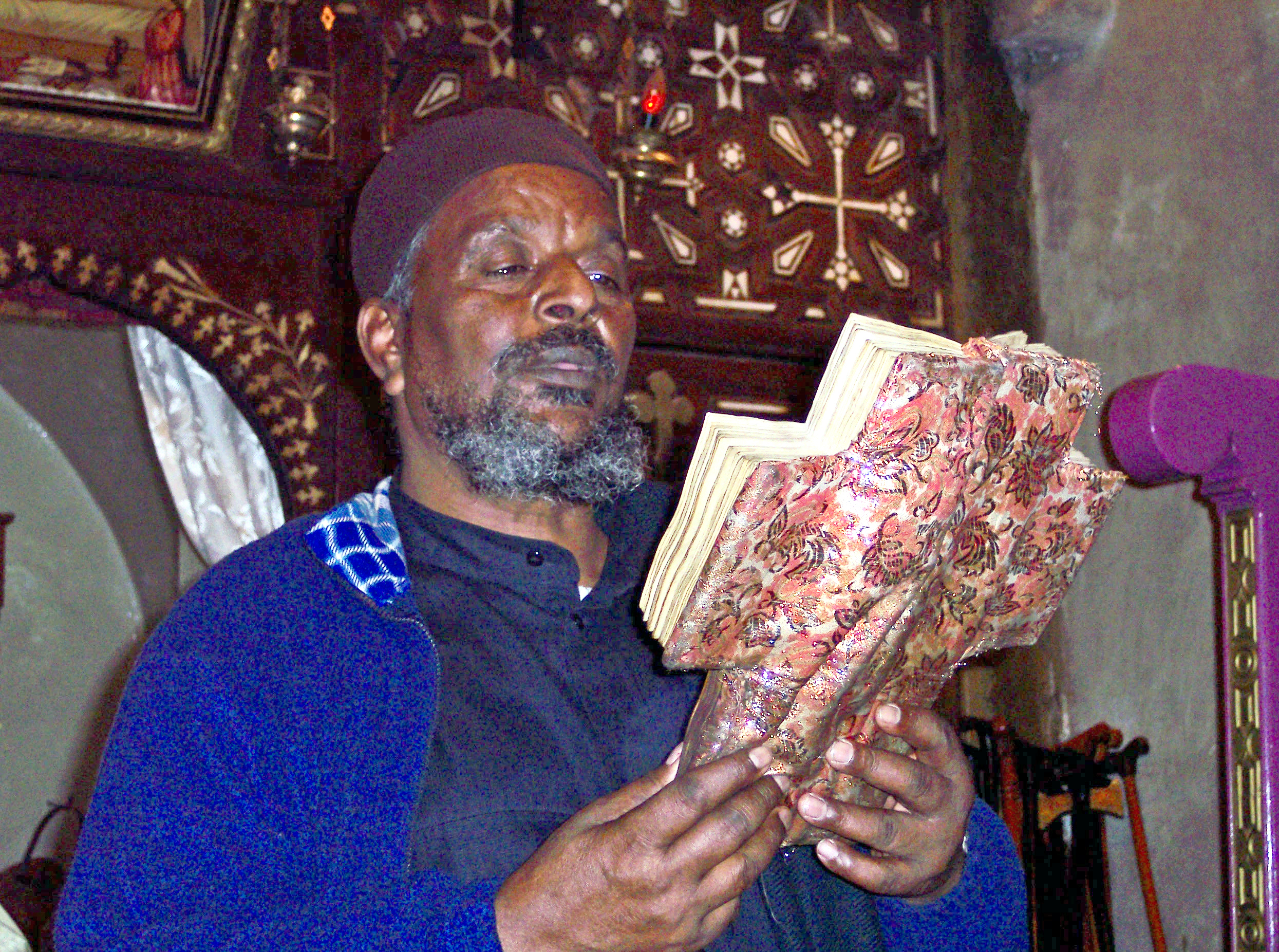
Something similar happened in Ethiopia. My wife Becky and I once had the opportunity to visit an Ethiopian Coptic Church in Israel. The priest we spoke with recalled the Church’s long history, pointing to a tapestry behind him depicting the Queen of Sheba’s visit to King Solomon (1 Ki 9). He then connected her story to a God-fearing Ethiopian who centuries later made his own pilgrimage to Jerusalem (Acts 8:26-40) and was baptized as a Jesus-follower. Both the Coptic Church and the Beta Israel community in that country have ancient roots.

In Wycliffe, we hear about these seeds all the time. Before a missionary sets out for the most distant place she can imagine, she needs to understand that God is there and working before she arrives. As I noted in my last post, there’s a second narrative: the purposes God is pursuing in the lives of the people before the missionary arrives. If you have any doubts, read Don Richardson’s 1981 classic, Eternity in Their Hearts

Faith can spring up in surprising contexts, standing out even more because of the darkness it’s set against. And dormant seeds that were sown centuries before can suddenly spring to life.

Do you have one of those stories, where you’ve seen God at work in unexpected places? I’d love to hear examples of God revealing a little spark of faith where we’d never expect it. Leave me a comment with your story.


Elijah series:

Unexpected testing

In my last post I looked at the remarkable sources of God’s provision for the prophet Elijah: God mobilizes scavengers, multiplies the assets of the poor and enables the marginalized to contribute. In doing so, God challenges the assumptions and mental blocks of the privileged and presumptive sources of provision—people like me. In fact, the story is told in a way I can identify with, because its focus is Elijah.

However, even as God is working his purposes in Elijah’s life, he’s also working in the widow’s life. He yearns for her to know him, and he’s using Elijah to bring about his purposes for her. The widow’s version of this story might read a lot differently, but there’s not much detail on which to build that retelling. So we try to read into the woman’s actions and the small handful of words captured in this story.

For instance, I would like to know if, when she enters the scene, she already has a spark of faith. Did God reveal in some way, prior to her meeting Elijah, his plan and calling to her? Even as she has lived on the edges of Israel’s border, has she been seeking Israel’s God? I also wonder how this widow responds to God’s daily miracle. 

In the previous act of this story (1 Ki 17:8-16), this widow took a leap of faith to trust the man of God. In this final act (1 Ki 17:17-24), she faces a crisis of faith. Just as things are starting to look hopeful, her son dies, and this setback seems to confirm her worst fears: that this God is just like all the others.9 For most people in her situation, there is no rags to riches outcome. She may even have been bracing for bad news because it figures, after the series of misfortunes she has experienced. Her words reveal her resentments and core beliefs: she asks Elijah what he has against her, but she’s really asking what God has against her. This loss might not be as painful if her heart hadn’t opened a bit.

It’s interesting that she raises the issue of sin (v18). Romans 5:13 tells us that “sin is not charged against anyone’s account where there is no law” (see also Rom 5:15); therefore, she’s not under the Hebrew Law. However, she understands in some way that she has missed the mark; she’s not in right standing with God. 

In that comment, she reveals that she understands sin has a price. But she also reveals that she was expecting grace, the primary characteristic of Yahweh she has personally experienced so far. In her pain and anger, she reveals a level of conviction and a fragile faith. 

Digging further, history tells us that worship of Baal sometimes required child sacrifice. Now the God of Israel seems to have taken her son. So again, is this God any different? It’s an enormous test of her faith, beyond what many fledgling believers could withstand. 

In fact, this is where Western believers sometimes get tripped up in their faith. Why would God allow this kind of trial when the woman’s faith is so fragile? It’s appalling to read stories like Jesus confronting the rich, young ruler and then watching him walk away (Matt 19:16-22) or offending his followers and chasing away those who weren’t serious (John 6:60-66). Why wouldn’t the God who doesn’t snuff out a smouldering wick or break a bent reed (Is 42:3) shelter this widow’s simple expression of faith until it’s strong enough to withstand a storm? What if her faith breaks? 

Elijah’s response suggests he has the same mindset; he even seems to be having his own crisis of faith. He doesn’t speak to the woman at all: no compassion expressed for her loss, but instead, a brusque, “Give me your son” and a march up the stairs to his room. His prayer reads to me as rather accusatory: God, did you bring tragedy on her? Did you kill the boy? Perhaps he expected his presence in her home to have brought her some kind of covering rather than make her life worse.

The passage says God listens—even to sullen, angry prayers like Elijah’s. Yet, for Elijah, the son’s resurrection was probably more of a relief than a moment of great joy. Maybe the woman’s faith will survive this crisis now.

Don’t miss the amazing faith in Elijah’s prayer; he asks God for something no one had ever dared to dream of before. Up until this moment, death was always the end. We get used to the New Testament stories, but this was the first recorded resurrection in the Bible.

Take a minute to read one of them: Luke 7:11-17. Jesus is traveling in Galilee when he encounters a funeral procession. The only son of a widow has passed away. Jesus raises the young man to life, then gives him to his mother. In this parallel story I see two insights into the Zarephath story.

First, Jesus responds with compassion and cares for the widow before addressing death. The contrast to Elijah’s bedside manner exposes where his response was lacking. Perhaps the difference is simply one of character and personality: Elijah was full of faith, but he was also a flawed individual who was prone to emotional ups and downs. But it also reveals power and knowledge: Jesus knew how the story would end, because even then he had authority over death, while Elijah was pleading for the impossible.

Second, we see the response of the witnesses: fear seizes them and they glorify God. They conclude two things: Jesus is a great prophet, and God has visited his people. The Sidonian widow concludes the same thing about Elijah and God:

  • She says, “Now I know.” She has experienced it herself.
  • She recognizes Elijah as a prophet—his words are truth, and in his mouth are the words of Yahweh.
  • When she identifies Elijah as a man of God, she refers to God as Elohim—the supreme God, the God of gods, the God over Baal.
  • The deeper message is a profession of her belief in God. She no longer refers to Yahweh as Elijah’s God, as she had in v12. God has visited her.

In God’s miraculous resurrection of her son, she encounters even greater power and even greater grace than she has been experiencing on a daily basis.

So why does God give her such an extreme test? I believe he knows that her faith can’t stay in its current condition. Elijah will soon be leaving, and she needs to be able to stand on her own feet. It is time for her to reach a decision about whether she and her household will believe, and serve the Lord (Josh 24:15).

I started this series researching to see how non-Westerners read this chapter. The North American approach would likely be to coddle such fragile faith by protecting the seedling, growing it carefully and guarding it from any real test in the early years. Many in the East and the South would say that’s unrealistic and point out that too much water or protection of a plant leads to shallow roots. Years later, when the plant is growing and should be mature, it is actually still fragile because of its roots. They would expect sacrifice, suffering and danger to come for a new believer, and rapid root growth is necessary for resilience.

We don’t know what happens with this woman after this. But her story can’t be looked at in isolation. Her line will now continue, and when seeds of faith are planted, you never know when they might pop back up again. We’ll look at that in our final post in the series.


References (intentionally seeking non-Western views)

9. Tse, Justin. “Elijah.” (Hong Kong) A Sermon for Revised Common Lectionary, Year C, Proper 5. Patheos. 27 July 2016. https://www.patheos.com/blogs/ecperson/2013/06/10/preaching-elijah/


Elijah series:

So, what movie did I pick?

The movie I went with for the Leadership Development Initiative film study was Invictus. In the end, what persuaded me was the timeliness of the story as well as the tight package of leadership lessons in 135 minutes. Let me share a few of my questions I used to stir conversation after the movie.

Invictus Study Guide

There were a number of characters who demonstrated leadership. We’ll start with Nelson Mandela, but most of us can’t identify with his character, so we’ll then look at a couple of the other characters.

  1. At the beginning, there’s a headline: “He can win an election, but can he run a country?” As Mandela grants, it’s a good question. Describe the leadership insight in that headline.
  2. Describe Mandela’s leadership style. In what ways—both bold strategies and small gestures—did Mandela demonstrate servant leadership?
  3. Can you think of any times when Mandela used a different leadership style? How did he employ situational leadership?
  4. What symbols and images were used by Mandela to bring about change?
  5. What are the upsides and challenges of attempting to repurpose a symbol?
  6. Mandela sets his goal on winning the World Cup—a goal he has no direct influence over. What strategies does he deploy?
  7. What did you learn about the relationship between leadership and followership?
  8. Name some of the other leaders in this movie. Which one do you most identify with? Why?
  9. Two in particular stand out, both of which are in #2 positions. Francois Pinaar, of course. But consider his chief of staff. In what ways does she support Mandela? In what ways does she challenge and become a foil to Mandela’s goals? What can we learn from her example?
  10. From Pinaar’s example, what can we learn about leadership when you’re not in the top position? How can leaders in #2 positions contribute to carrying forward the vision?
  11. The William Ernest Henley poem Invictus became an inspiration to Nelson Mandela during his captivity, and he uses it to inspire Pinaar. It ends with the lines, “I am the master of my fate: I am the captain of my soul.” What does Mandela’s inspiration tell us about the importance of leading yourself before you lead others?
  12. While there’s no evidence that Mandela was a follower of Jesus Christ, his life exemplifies the gospel message. Ultimately, Mandela’s modeling and message of grace is what sets him apart in human history. In what ways does he lead his country into grace and forgiveness? What were the pundits saying about South Africa when Mandela was first released, and what was the result of his counter-cultural leadership?

Managing grace

A couple of months ago, missiologist Ed Stetzer spoke at CrossPointe Church Orlando. As he read familiar words from 1 Peter, he freely substituted the word “manager” for “steward.” It’s probably a good shift for us, because we don’t live in a world of stewards. It’s not a context we’re familiar with. Managers we understand. Let’s look at I Peter 4:10 in the NKJV, using Stetzer’s subsitution:

As each one has received a gift, minister it to one another, as good managers of the manifold grace of God.

What Peter is saying here is that when we use our gifts in ministry, we’re managing grace. For starters, he’s referring to the personal management of the gift we’re given, but I believe Peter goes further than the individual interpretation we Westerners are used to. As there is throughout the New Testament, there’s an others-focus in Peter’s admonition. I think it’s fair to apply “managers” in an organizational sense.

Perhaps this is a good time to refresh ourselves on what management is. Drawing from Robert Banks and Bernice Ledbetter, as interpreted by Sherwood Lingenfelter, we might say managing means:

  • to organize
  • to control
  • to maintain focus
  • to allocate resources around

The point of managing is that we don’t own the resources we are responsible for. We are to have a stewardship mindset toward God’s grace. And yet, every day we have the capacity to manage badly. We have plenty of opportunity to hold back the distribution of grace in our office, church and home cultures. As it’s easy to suppress or misdirect our own gifts, we do the same within our teams — sometimes in the exercise of our own gifts. It’s an easy temptation to try to manipulate behavior in others by controlling grace, withholding approval or granting favor unequally. But Peter calls us instead to be proactive, godly, open-handed stewards of that grace.

I remember visiting another mission organization a few years ago and admiring their core value of “a culture of grace.” In Wycliffe’s own journey toward building intentional diversity among our staff, one phrase that has become part of our common lexicon is to “increase our grace capacity.” What does that look like? How do we manage grace in that kind of high-capacity culture?

  • We meet failure with forgiveness and consider it an opportunity to grow.
  • We are careful to consider strengths in building diverse teams, recognizing that God’s gifts are distributed broadly, and God doesn’t just speak to the boss.
  • We honor others by focusing, harmonizing and enhancing the gifts God has given them.
  • We treat others as we want to be treated, forgive others as we want to be forgiven and love others as we want to be loved.

Who wouldn’t want to work in an environment like that?

Romans 12 – criticism

14 Bless those who persecute you. Don’t curse them; pray that God will bless them…. 17 Never pay back evil with more evil. Do things in such a way that everyone can see you are honorable…. 19 Dear friends, never take revenge. Leave that to the righteous anger of God. For the Scriptures say,

“I will take revenge;
I will pay them back,”
says the Lord.

20 Instead,

“If your enemies are hungry, feed them.
If they are thirsty, give them something to drink.
In doing this, you will heap
burning coals of shame on their heads.”

21 Don’t let evil conquer you, but conquer evil by doing good.

Criticism is one of the hardest things for a leader, in part because so many are driven by a desire for approval. This passage speaks to the very heart of that issue. I think I can sum up these verses with two main points. First, a leader’s response to criticism will reveal his heart — his faith and his character. And second, that critics have their place. We need them because they can provide contrast and excellent feedback.

Nothing exposes a leader like a good critic. People who get under our skin, who persecute us or who find fault with every attempt to move an organization forward can fester like nothing else. They try us most because they are immune from all of our skills of influence and persuasion. They therefore quickly expose our foundations. Do we really have faith in God’s sovereignty? Do we really believe that God will deal with them? And what is our character made of? Are we really honorable, kind and full of grace? Or are we vengeful and vindictive, impatient and short-tempered?

I got a recent insight on this topic from Shepherding a Child’s Heart. When kids are bullied at school, what do parents teach them? Tedd Tripp’s response draws straight from Romans 12:

It doesn’t take grace from God to ignore the oppressor. It doesn’t take supernatural grace to stand up for your rights. To do good to oppressors, however, to pray for those who mistreat you, to entrust yourself to the just Judge, requires a child to come face-to-face with the poverty of his own spirit and his need of the transforming power of the gospel.

So, whether we’re a leader or a child, God calls us to a higher standard that cannot be achieved apart from His supernatural grace at work in our own lives. What’s the condition of our own hearts?

Since I’ve taken so long composing this post, I’m going to go ahead and publish part 1.

Romans 12 – moral authority

3 Because of the privilege and authority God has given me, I give each of you this warning… (NLT)

3 For by the grace given me I say to every one of you… (NIV)

Two versions of the same verse cast slightly different light on the subject of authority. In my July post on authority, I named two kinds of non-positional authority. Paul refers to both here. There’s a reason Paul can speak into the lives of the Church in Rome — because he has spiritual and moral authority in their lives. I think it’s noteworthy that he doesn’t say, “Because of my position as apostle…” There are a couple of times when Paul took a lot of space in his epistles defending his role as an apostle. Apparently, there was some question as to his position since he did not spend any time with Jesus himself. But here he’s not referring to any positional kind of power.

Paul has authority because of two reasons. First, because of his investment in the Roman church, they have given him moral authority in their lives. Second, because God has given authority to him. It’s by God’s grace — what Christ did to pull him out of the life he was in — that he has the privilege and authority of influencing this group. He can therefore teach, encourage, cajole and rebuke the Church in the most powerful city in the world.

Mind you, Paul didn’t necessarily shy away from titles. He regularly identifed himself as “bond slave of Christ” and “chief of sinners.” A position of genuine humility can go a long way to building authority.

Romans 12 – self awareness

3 Because of the privilege and authority God has given me, I give each of you this warning: Don’t think you are better than you really are. Be honest in your evaluation of yourselves, measuring yourselves by the faith God has given us.

It happens every year. A young lady shows up on American Idol, sings her heart out… and the judges cringe. When someone informs her that she’s bad, she appears genuinely shocked.* Why? Because her entire life, she’s been told that she can sing. She has never received honest feedback until Simon Cowell.

* Go with me here. I know it’s all rigged.

Do you have a Simon Cowell in your life? Okay, bad example. Do you have someone in your life who has the privilege and authority in your life to tell you the truth? Paul had the ability to say this to the Roman church because of his role as spiritual father and apostle. Perhaps for you it’s a pastor or mentor or Proverbs-worthy friend, but you need people to give you an honest assessment, particularly as you move up in leadership.

What if you’re not really as good a leader as you think you are? This is a tough question, so take a minute to think about it.

I’ve read many times that when a superstar executive is plucked from a team by headhunters to fill a new leadership position in another company, they can’t reach the same success in the new setting. Why? It’s the drumbeat I’ve been saying for some time now: leadership is contextual. You are likely only as good as the team you’re surrounded by and the ideal match of your abilities to the challenges and opportunities you’re facing. Before you take credit for things that God has given you, read Daniel 4 as a warning from King Nebuchadnezzar.

I believe self-management is the first requirement of leadership. The Bible is clear that if you can’t lead yourself, you can’t lead others. The first step, then, is to know yourself. Know what you’re good at and what you’re not. Leaders have as few blindspots as possible and know their weaknesses well so they can lead to their strengths and staff to their weaknesses. But it’s true that the higher you move up in leadership, the more difficult it is to keep from living in a coccoon. There’s no one to tell you the truth, and it’s difficult to stop believing your own press.

The sticking point in these verses to me is that line, “measuring yourself by the faith God has given us.” What does that mean? For starters, if faith is the assurance of things unseen, then our plum line is not anything readily apparent to us. It’s not the media or our kiss-up friends. Our plum line is how God sees us. He’s the one who can see our insecurities and our coping mechanisms. He’s the one who sees past our false bravado. He’s the one who sees how our “courageous decision” was really just a guess, and this time it worked. He knows all that… and more.

Yet he also knows our full operating potential, because he’s the manufacturer. I think God believes in us. When we consider others better than ourselves and are quick to give credit to others for the success we enjoy, I think we’ll uncover a lot of the potential he built in.

Matthew Henry has a great admonition to sum up my last two posts (and this is a nice counterpoint to my recent posts on ambition):

We must not say, I am nothing, therefore I will sit still, and do nothing; but, I am nothing in myself, and therefore I will lay out myself to the utmost, in the strength of the grace of Christ.