
As I began to unpack in my last post, it’s easy to think that faith thrives when the environment shelters it. However, faith actually suffers when roots don’t need to run deep. There’s something about hostile or dry environments that draws out deep faith.
And when faith springs up and flowers in dark places, it shines even brighter.
The Bible puts Sidon firmly in the “dark” category. The region became wealthy through the trading done by their sea merchants, and the triumvirate of Isaiah, Jeremiah and Ezekiel all predict Sidon’s downfall for her sins against God (Is 23; Jer 25:15-22; Ez 28:20–24). But it turns out that the widow’s faith is not exceptional; it’s actually part of a pattern.
First, Yahweh’s Temple is built with Sidonian cedar (1 Chron 22:4). How did that happen? While God intended for Joshua to drive out the peoples in modern-day Lebanon (Josh 13:6), the Sidonians were among those who remained as a thorn in Israel’s side (Judg 3:1-4). But when King David sets up a system of tribute and forced labor for many of these tenacious peoples, he instead works out a cooperative relationship with Sidon and Tyre. 1 Kings 5 records that the king of Tyre loves David so much that he willingly contributes huge amounts of cedar and woodworkers to build the Temple.
Jumping to the New Testament, Jesus shames the Galileans by telling them that if Sidon had seen the miracles he performed among them, they would have repented quickly (Matt 11:21). Clearly he sees them as spiritually open and much more willing to accept his words than his own people are. Indeed Luke 6:17 notes that large numbers of people from Sidon come to hear him preach and be healed.
Then in Mark 7:24-30 and Matthew 15:21-28, Jesus brings his disciples to the area for a retreat. They’ve been running flat out, and John the Baptist has been martyred. Jesus intends to give them a break in a resort town, but a local woman recognizes Jesus and pesters his disciples relentlessly about her daughter’s demonic possession. Jesus first puts her off by saying his primary mission is to Israel. But her tenacity, her submission and her scrappy logic impress him. Jesus responds, “Woman, you have great faith!” He then rewards this faith by healing her daughter. The receptivity of this audience seems to change Jesus’ priorities in the short term. The next thing Jesus does is head for the Gentile region east of the Sea of Galilee. In fact, Jesus never commends the faith of anyone in Israel, but only among foreigners (for instance, Matthew 8:10).
So the Sidonian widow is not really an aberration. There are a number of reasons why this woman might find Israel’s God appealing:
- Power: Baal, her people’s god of harvest, seems powerless to defeat Yahweh’s control over the rain.
- Compassion: Israel’s God shows himself willing to hear the cry of widows and orphans, even foreign ones. As Exodus 22:21–23 says: “Do not mistreat or oppress a foreigner, for you were foreigners in Egypt. Do not take advantage of the widow or the fatherless. If you do and they cry out to me, I will certainly hear their cry.”
- Grace: She’s encountering grace on a daily basis. In spite of her sin, Elijah and his God are still providing for her rather than judging her.
There’s something about Sidon, this land in such close proximity to God’s people, struggling to hold onto its beliefs and stand against Israel’s religion. Spiritual sensitivity and hungry seekers keep popping up from that region throughout the Bible. Perhaps this is the ultimate answer to Jesus’ provocative question to the Jews: if there were lots of widows in Israel, why did God use a widow in Sidon? (Luke 4:25-26).
But what if these aren’t one-off examples? What if the roots are connected? What if the widow is open to Yahweh because of David’s kindness to King Hiram? What if the woman with the demon-possessed daughter reaches out to Jesus because the story of that widow was embedded in her culture? A seed had been planted centuries before.
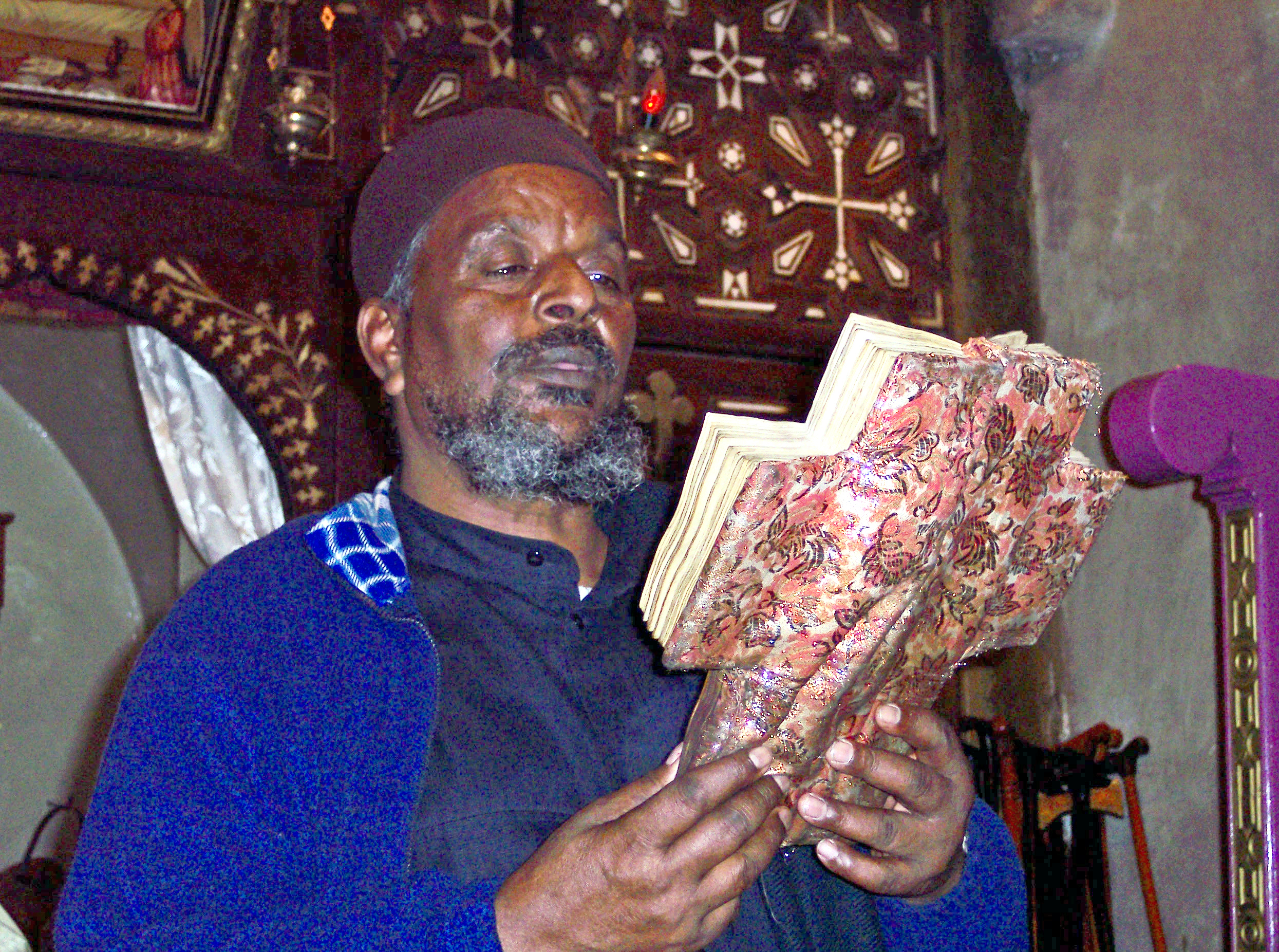
Something similar happened in Ethiopia. My wife Becky and I once had the opportunity to visit an Ethiopian Coptic Church in Israel. The priest we spoke with recalled the Church’s long history, pointing to a tapestry behind him depicting the Queen of Sheba’s visit to King Solomon (1 Ki 9). He then connected her story to a God-fearing Ethiopian who centuries later made his own pilgrimage to Jerusalem (Acts 8:26-40) and was baptized as a Jesus-follower. Both the Coptic Church and the Beta Israel community in that country have ancient roots.
In Wycliffe, we hear about these seeds all the time. Before a missionary sets out for the most distant place she can imagine, she needs to understand that God is there and working before she arrives. As I noted in my last post, there’s a second narrative: the purposes God is pursuing in the lives of the people before the missionary arrives. If you have any doubts, read Don Richardson’s 1981 classic, Eternity in Their Hearts.
Faith can spring up in surprising contexts, standing out even more because of the darkness it’s set against. And dormant seeds that were sown centuries before can suddenly spring to life.
Do you have one of those stories, where you’ve seen God at work in unexpected places? I’d love to hear examples of God revealing a little spark of faith where we’d never expect it. Leave me a comment with your story.
Elijah series:
- Unexpected preparation
- Unexpected provision
- Unexpected testing
- Unexpected faith
 the back row leader
Pingback: Unexpected testing | the back row leader
Pingback: Unexpected provision | the back row leader
Pingback: Unexpected preparation | the back row leader